
American Telephone Girls Well Cared for in France - 1918
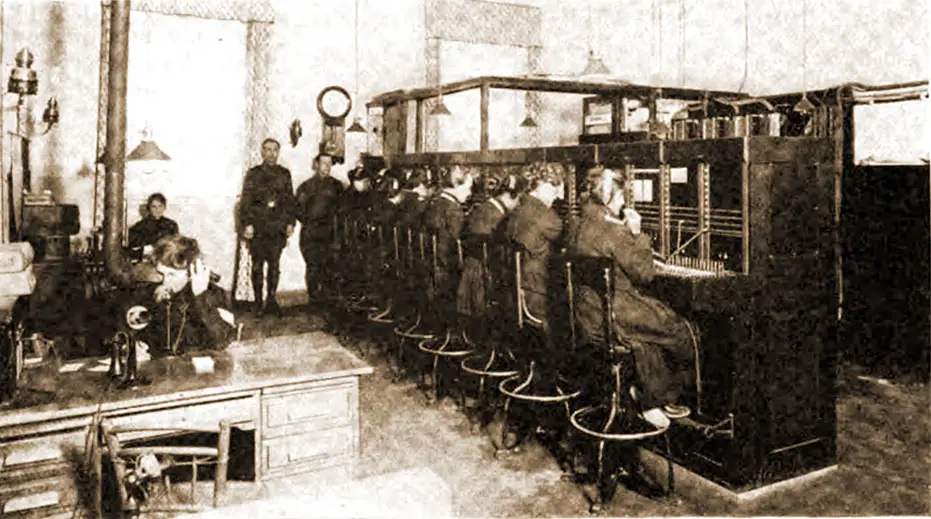
American Telephone Operators Near the Front in France. The Telephone Review, September 1918. | GGA Image ID # 19b3aa1010. Click to View a Larger Image.
📖 Review & Summary
This 1918 article, originally published in the Chicago Tribune and reprinted in the Bell Telephone News, highlights the welfare work of Miss Mary A. Dingman and the Y.W.C.A. on behalf of American women serving overseas. Before the “Hello Girls” became famous for their military communication roles, they were already receiving care and support through YWCA initiatives that ensured safe housing, recreation, and moral guidance.
At Tours, France, Dingman and her colleagues transformed the idyllic Isle de Simon into a rest and recreation retreat for American telephone operators and WAACs. The piece underscores the importance of emotional and physical well-being in sustaining efficiency among the Signal Corps’ female staff. It’s one of the earliest press accounts to portray these women not just as workers but as pioneers balancing professionalism, patriotism, and dignity abroad.
Miss Mary A. Dingman of New York, who is active in the work of the YWCA in France, interestingly describes the work of this organization in the Chicago Tribune:
The work is not of a religious nature except when a few of the secretaries get together for a brief service now and then.
They are devoting their efforts almost entirely to improving the conditions under which Frenchwomen labor and to providing homes for the 5,000 "Waacs"—Women's Auxiliary Army Corps—and the American telephone operators who have come over to help "man" the American army switchboards behind the lines.
Other American women in the war service are taking advantage of the hospitality offered by the YWCA, particularly in Paris, where two large hotels already have been taken over by them, supplying the telephone girls and others with all the comforts of home.
Miss Dingman is particularly interested in the recreational aspects of her organization's work. After a recent visit to Tours, she returned to headquarters with a new smile on her face. She had in her possession a lease calling for the transfer to the Y. W. C. A. of the beautiful west end of the Isle de Simon, situated in the middle of the Loire. The river is attractive at this point, and the islet, nestling between the swift-flowing currents, is an ideal spot for quiet and recreation.
"You see," said Miss Dingman, "our telephone girls and Waacs and others now stationed at Tours have no place to go for their rest and recreation. They receive the best of attention in their barracks and are closely looked after. Still, when the rest period comes, they have no place of their own to which they can go and have a good stretch, read a book, and get a breath of the fresh air undisturbed by anyone.
So, we have secured this island for them, and when it is all set up, it will be simply ideal. Here they may go during their rest hours, have their little picnic parties, recline in the shade under restful and quiet surroundings, and just relax to their hearts' content."
✨ Most Engaging Content
- YWCA Leadership: Mary A. Dingman’s dedication reveals how civilian women’s organizations supported wartime service behind the front lines.
- Isle de Simon Retreat: The leased island on the Loire River served as a peaceful escape where telephone operators could rest, read, and recover from long hours at the switchboard.
- Human Side of Service: Unlike military reports, this article shows compassion—acknowledging that rest and morale were as essential as technical skill.
🖼️ Noteworthy Image(s)
American Telephone Operators Near the Front in France (1918)
The photograph from The Telephone Review captures the professionalism and teamwork of Signal Corps operators. It shows how women worked in structured, often improvised facilities close to active combat zones—an early image of gender integration within the U.S. Army’s communications system.
📘 Mini Dictionary for Civilians
- YWCA (Young Women’s Christian Association): A global organization providing housing, education, and moral support for women, especially during wartime service.
- WAAC: British Women’s Army Auxiliary Corps, often referenced as the model for women’s auxiliary service in the United States.
- Tours: A French city on the Loire River that served as a key base for American logistical and communication operations during World War I.
- Isle de Simon: A small island in the Loire River used by the YWCA for rest and recreation facilities for American servicewomen.
🎓 Essay Prompts for Students
- How did the YWCA’s support of telephone operators and WAACs contribute to the overall success of the American Expeditionary Forces?
- In what ways did early press coverage like this article help shape public perceptions of women’s wartime roles?
- Compare the YWCA’s approach to welfare and morale support with today’s military family readiness programs.
- What does this article suggest about class and gender expectations for women working abroad during World War I?
📚 Cite This Page
Chicago Style:
“American Telephone Girls Well Cared for in France.” Chicago Tribune (reprinted in Bell Telephone News, Detroit Edition, Vol. 8, No. 2), September 1918, p. 13. Reproduced at the Gjenvick-Gjønvik Archives. https://www.ggarchives.com/MIL/HelloGirls/Press/AmericanTelephoneGirlsWellCaredForInFrance-1918.html
APA Style:
Dingman, M. A. (1918, September). American Telephone Girls Well Cared for in France. Chicago Tribune / Bell Telephone News, 8(2), 13. Retrieved from Gjenvick-Gjønvik Archives: https://www.ggarchives.com/MIL/HelloGirls/Press/AmericanTelephoneGirlsWellCaredForInFrance-1918.html
MLA Style:
“American Telephone Girls Well Cared for in France.” Chicago Tribune (reprinted in Bell Telephone News), Sept. 1918, p. 13. Gjenvick-Gjønvik Archives, https://www.ggarchives.com/MIL/HelloGirls/Press/AmericanTelephoneGirlsWellCaredForInFrance-1918.html.
Student Version:
“American Telephone Girls Well Cared for in France.” (1918). Chicago Tribune / Bell Telephone News. Reprinted by the GG Archives. GG Archives Link
“American Telephone Girls Well Cared for in France,” in Bell Telephone News, Detroit Edition, Vol. 8, no. 2, September 1918, p. 13.
