
American “Hello Girls” in France Enjoy High Life - 1919
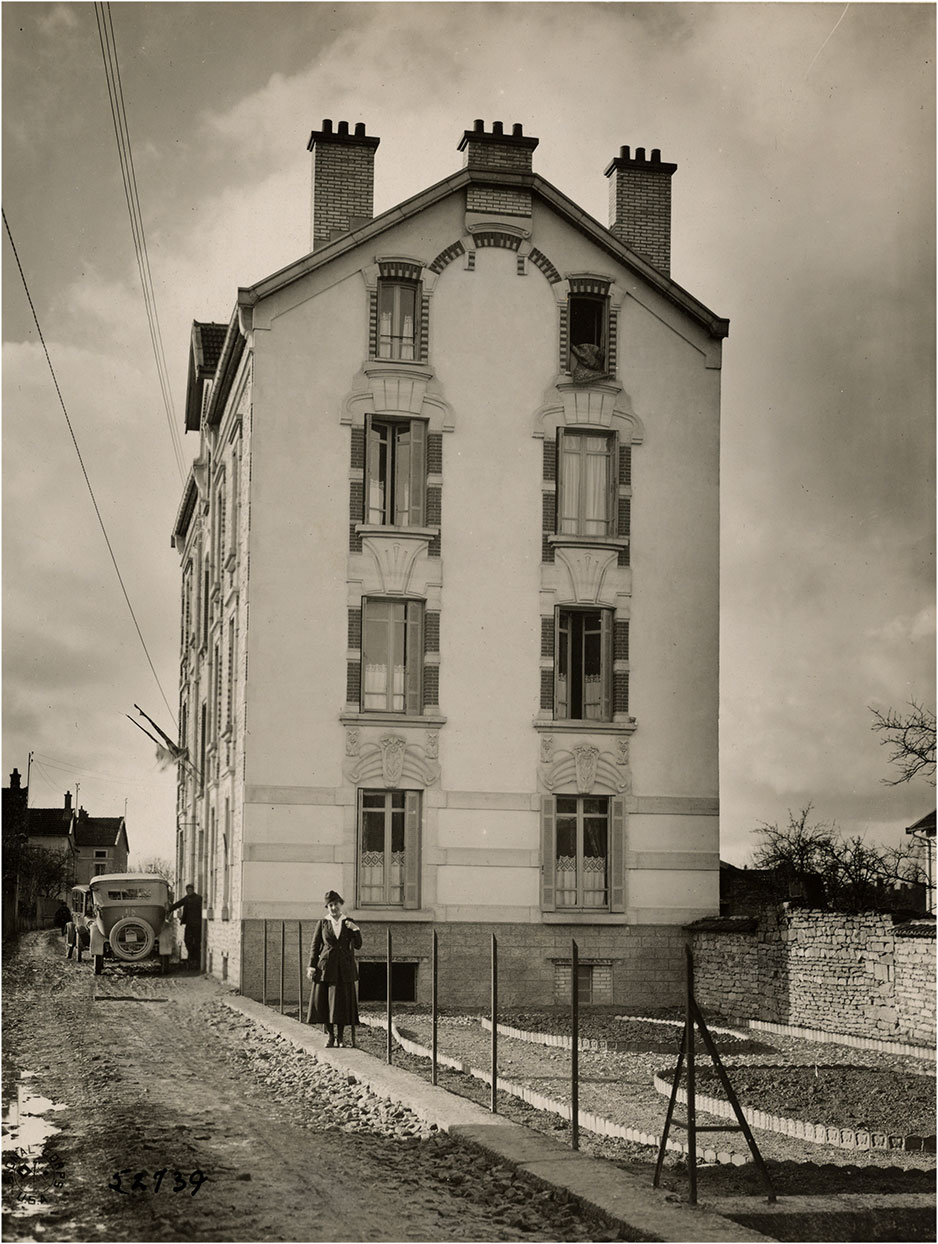
Exterior View of Women Telephone Operators Home, Signal Corps, Chaumont, Haute Marne, France. Photograph by Sgt. Abbott, Signal Corps, 19 February 1919. National Archives and Records Administration, 111-SC-52739. NARA ID # 86710683. GGA Image ID # 199ba4fdbf. Click to View a Larger Image.
📖 Review & Summary
This 1919 article paints a vivid picture of the U.S. Army Signal Corps “Hello Girls” after victory in Europe. Stationed at Chaumont and Toul, France, the operators lived in converted French chateaux and kept military communication lines open during the final months of World War I and the early occupation period.
The feature, written with humor and admiration, highlights how these women balanced rigorous duty with everyday comforts—shared meals, music from a Victrola, and friendship across ranks. It also reflects a shifting public perception: the “telephone girls” were no longer anonymous operators but professionals serving their nation abroad. The story offers a glimpse into how American women redefined military service and domestic life overseas in 1919.
BOSTON, Mass., April 13, 1919. —"Hello Girls" In France, soon to be on their way home, they have had the times of their lives. "Home was never like this. Gee, we live like queens," one girl from Boston writes home.
Steaks and chips for dinner, beautiful hotels and quaint, old-fashioned French chateaus to live in, handsome officers for sweethearts, and Paris boulevards for promenades are only a few of the things that have contented Uncle Sam's telephone operators in France during that great war.
How good the first undeniable American "Hello" must have sounded over the wires in France; the same "Hello" that we heard from pretty "Miss Murphy" in Boston, from girls in New York City, in Kennebunk. "Hello," with a pleasant questioning tone. If she is good-natured, "Hello." If she's cross.
But the telephone operator in France was too busy to lose her patience. When she was establishing vital connections and locating a major for a colonel, she remained constantly aware of the Importance of her mission, her eagerness not to falter, interspersed only with thrills of excitement over incoming messages.
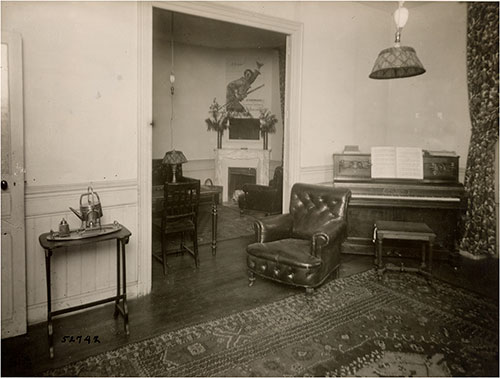
Another View of the Reception Room in Signal Corps Women Telephone Operators' Home at Chaumont, Haute Marne, France. Photograph by Sgt. Abbott, Signal Corps, 19 February 1919. National Archives and Records Administration, 111-SC-52742. NARA ID # 86710689. GGA Image ID # 199c2dc04e
Have Military Status
Very little has been said about the work of American women telephone operators in France. Although they have seldom been in great danger, their importance was vital.
The first group of American women telephone operators arrived in Paris in March 1918, and up to the signing of the armistice, several other units followed.
They have a military status equivalent to the "Waacs," the British Women's Army Auxiliary Corps, and their businesslike navy-blue uniforms, blue trench caps, and white arm bands, with a telephone Mouthpiece embroidered in blue, tell their work.
"Keeping house in France for American girls," writes Sarah Watson, a Y. W. "Big Sister," to a Signal Corps unit, "may be the least romantic work that any American woman is doing here, but It Is certainly full of variety and most Interesting experiences. I have bed my pet theories changed over here.
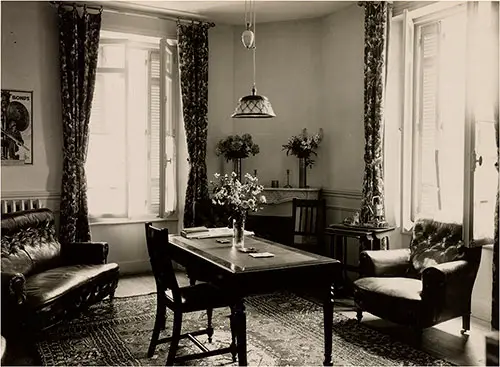
View of the Reception Room, Signal Corps Women Telephone Operator's Home, Chaumont, Haute Marne, France. Photograph by Sgt. Abbot, Signal Corps, 19 February 1919. National Archives and Records Administration, 111-SC-52743. NARA ID # 86710691. GGA Image ID # 199cb8c626
As a schoolmarm, I thought the endless talk of servants, the health of children, and the kinds of food was a most unnecessary and boring form of amusement for many women.
Now I know that unless the cook comes on time, the steak won't be burnt. The children are well and happy, but life can hold no Joy for the mother. She is vitally interested in the price per kilo of 'pommes de terre' and carrots. In receipts for deserts and farm, more than this, she is vitally concerned in her children's pleasures and friends.
"My family, or the girls under my care, has grown considerably, and I am now the proud possessor of twelve girls, with the prospects of six more very soon coming from a station near the firing line. Our house has grown too small for us, and we are moving in a few days to Riverside Drive in this city, within a short distance of the spot where the first American troops landed in France.
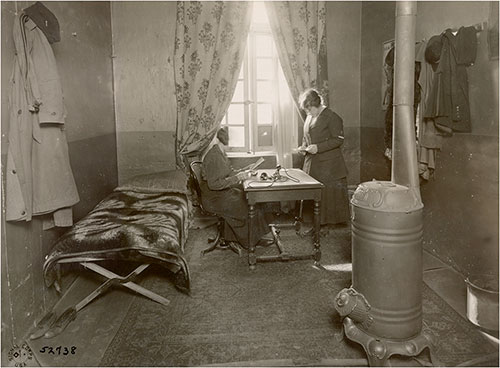
Rest Room for Women Operators at General Headquarters, Signal Corps, Chaumont, Haute Marne, France. Photograph by Sgt. Abbott, Signal Corps, 19 February 1919. National Archives and Records Administration, 111-SC-52738. NARA ID # 86710681. GGA Image ID # 199cc4c294
Victrola Kept Busy
“The salon commands a glorious view of the ocean, and the equally large sile-a-manger opens on a delightful little garden. We are next door to the Knights of Columbus and have the privilege of attending their Wednesday night band concert, held in the most beautiful garden in town.
The Victrola is kept going over there all day, so we have the advantages and disadvantages of living next door to a continuous concert. This house has a bath, and bids for the first bath in a real tub, one of the very few in this particular town, are many.
We joke continually about the tub. A real bath, however, is no joke in most parts of France, but a solemn and seldom enjoyed ceremony.
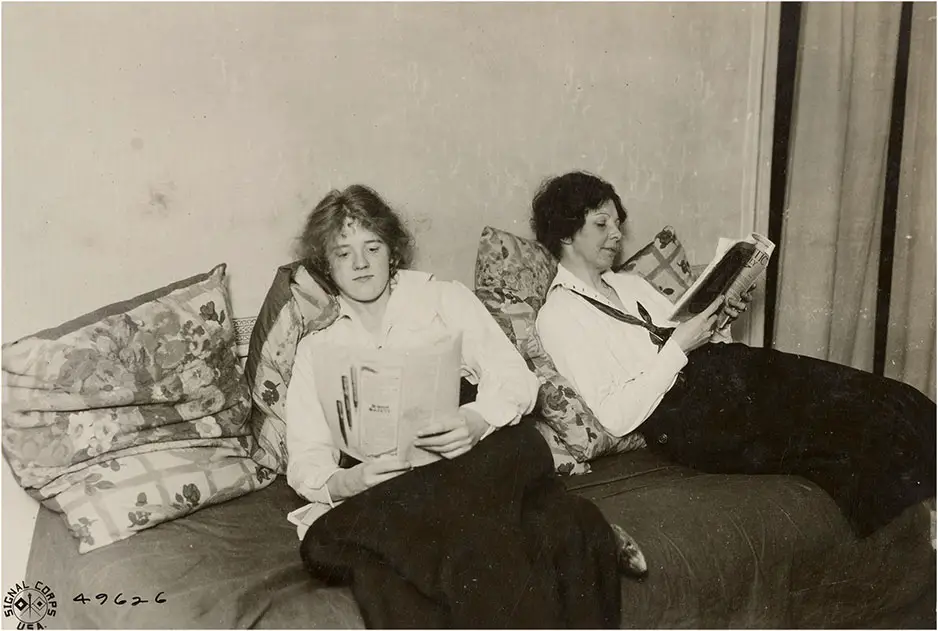
The Reading Hour; Melanie Van Gastel and Elenore A. Brown, Signal Corps Telephone Operators, Second Army, Toul, Meurthe and Moselle, France. Photograph by Lt. Fox, Signal Corps, 15 January 1919. National Archives and Records Administration, 111-SC-49626. NARA ID # 86705358. | GGA Image ID # 199cdd4792. Click to View a Larger Image.
“Then there is gas in the kitchen, and only the housekeepers can appreciate that. The thought of being able to cook more than one article of food at a time and being able to have enough hot water for all the gallons of tea that we like to drink rivals the prospect of the magnificent view that the two great windows in the salon afford of all the boats going to and from America with troops.
“The secretaries in charge of the telephone groups see to it that the girls meet and entertain the American Soldiers under jolly, wholesome circumstances. In the headquarters town, a reception was given to the officer stationed there. Real American “honey” parties are often staged. One crowd of boys had an unbelievably good time at a Signal Corps girls’ party.
To Give Farewell Party
“It was the first party with girls they had had over there,” says Miss Watson, “and their appreciation was touching. Some of them hadn’t had a late pass in the months they had been here. We could scarcely get them out of the house at half-past eleven, so novel was the experience of being with American girls and out of camp after half-past nine.
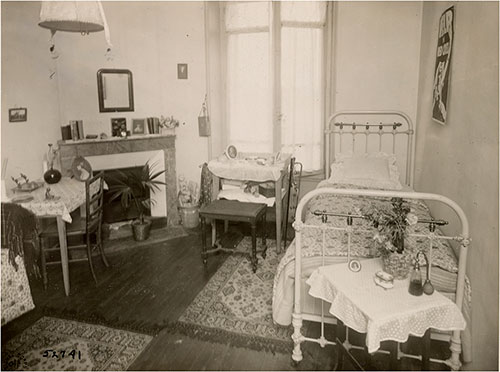
Bedroom in Women's Telephone Operators' Home, Signal Corps, Chaumont, Haute Marne, France. Photograph by Sgt. Abbott, Signal Corps, 19 February 1919. National Archives and Records Administration, 111-SC-52741. NARA ID # 86710687. GGA Image ID # 199ce4dd07
They ate sandwiches and drank lemonade with the same enthusiasm they displayed on picnics at home when they were smaller and younger, but no more small-boy-like than now. The American man never grows up. He is always ready to play the fool and music. Our last night in our house is to be spent having a party for the line men, etc., of the Signal Corps.
“The girls are staying at home in the evenings more and more, and all of us have good times together in the salon or garden, and now that the cool weather has come, we can have games in the evenings, songs, and make pull candy.”
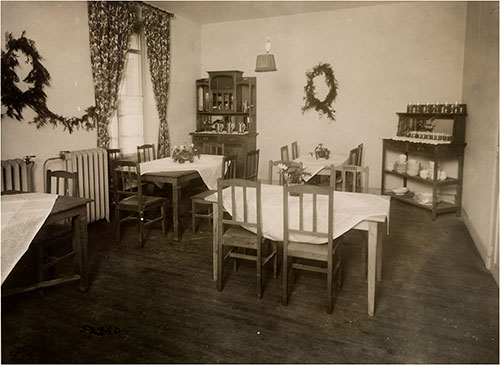
Dining Room in Women Telephone Operators' Home, Signal Corps, Chaumont, Haute Marne, France. Photograph by Sgt. Abbott, Signal Corps, 19 February 1919. National Archives and Records Administration, 111-SC-52740. NARA ID # 86710685. GGA Image ID # 199cfec7ff
✨ Most Engaging Content
- Daily Life in France: The article’s mix of steak dinners, elegant chateaux, and busy switchboards conveys the contrast between comfort and duty.
- Human Connection: “Home was never like this” captures the pride and novelty of women living independently under Army command.
- Recognition of Service: The mention of military status equal to Britain’s WAACs underscored the growing legitimacy of women’s roles in uniform.
- Friendship and Morale: Parties, music, and camaraderie reveal how these women maintained spirit and community amid foreign surroundings.
🖼️ Noteworthy Image(s)
Exterior View of Women Telephone Operators’ Home, Chaumont, France (1919)
The National Archives photograph by Sgt. Abbott shows the stately residence that served as both quarters and command center for the Signal Corps women. Its elegance contrasts with their technical, military duties—symbolizing the blending of refinement and resolve in wartime service.
The Reading Hour – Toul, France (1919)
A quiet image of two operators, Melanie Van Gastel and Elenore Brown, reading together after long shifts at the switchboard. This serene photograph captures the humanity of service life often overlooked in wartime reporting.
📘 Mini Dictionary for Civilians
- Signal Corps: U.S. Army branch managing battlefield communications through telephone, telegraph, and radio systems.
- WAAC: British Women’s Army Auxiliary Corps, established in 1917, served as a model for U.S. women’s wartime enlistment.
- Chaumont: Headquarters of General John J. Pershing and the American Expeditionary Forces in France.
- Salon: French term for a large living or sitting room, often the social center of a home or chateau.
- Victrola: A popular early phonograph used for music and morale in wartime quarters.
🎓 Essay Prompts for Students
- How did the press portray the “Hello Girls” differently in 1919 compared to earlier wartime coverage?
- What does this article reveal about post-war life and morale among American troops and support staff in France?
- Discuss how living conditions at Chaumont illustrate the intersection of luxury, labor, and leadership for women in military service.
- How might articles like this have influenced public opinion about women’s professionalism and independence after World War I?
📚 Cite This Page
Chicago Style:
“American ‘Hello Girls’ in France Enjoy High Life in Quaint Chateau.” The Greenville News (Greenville, South Carolina), April 14, 1919, p. 8. Reproduced at the Gjenvick-Gjønvik Archives. https://www.ggarchives.com/MIL/HelloGirls/Press/AmericanHelloGirlsInFranceEnjoyHighLife-1919.html
APA Style:
The Greenville News. (1919, April 14). American “Hello Girls” in France Enjoy High Life in Quaint Chateau. Retrieved from Gjenvick-Gjønvik Archives: https://www.ggarchives.com/MIL/HelloGirls/Press/AmericanHelloGirlsInFranceEnjoyHighLife-1919.html
MLA Style:
“American ‘Hello Girls’ in France Enjoy High Life in Quaint Chateau.” The Greenville News, 14 Apr. 1919, p. 8. Gjenvick-Gjønvik Archives, https://www.ggarchives.com/MIL/HelloGirls/Press/AmericanHelloGirlsInFranceEnjoyHighLife-1919.html.
Student Version:
“American ‘Hello Girls’ in France Enjoy High Life in Quaint Chateau.” (1919). The Greenville News. Reprinted by the GG Archives. GG Archives Link
“American “Hello Girls” in France Enjoy High Life in Quaint Chateau in France,” om The Greenville News, Greenville, South Carolina, Monday, 14 April 1919, p. 8
