
Memento of the Telephone Operating Units Signal Corps (1918)
📖 Review & Summary
The Memento of the Telephone Operating Units – Signal Corps (1918) is one of the most evocative surviving artifacts of the “Hello Girls,” the pioneering U.S. Army Signal Corps female telephone operators who served in France during World War I. Published at Christmas 1918 by the American Expeditionary Forces, the booklet was a combined souvenir and commendation volume presented to the operators as a token of gratitude for their exceptional service under wartime conditions.
Each copy included messages of appreciation from commanding generals, portraits of officers and operators, and candid photographs taken in field exchanges across France. The production quality, bound in simple brown board with a string tie, reflected both wartime austerity and sincere recognition. Within its pages, these women were addressed not as clerks or contractors, but as fellow soldiers who had “braved the dangers of the sea and faced the vicissitudes and discomforts of service on a distant foreign shore.”
Beyond its rarity, the Memento stands as a vital link between wartime experience and postwar memory. It documents a moment when the Army itself, despite later bureaucratic denial, informally acknowledged the women’s military identity. For teachers and students, it serves as a tangible case study of how artifacts preserve the lived reality of service members whose official records did not reflect their sacrifice.
The booklet’s later rediscovery and inclusion in museum and archival collections—often accompanied by personalized copies like that of Operator Delta E. Hagan—has helped historians trace the human story behind the legislative recognition of the Hello Girls in 1977. Today, the Memento continues to remind us that acknowledgment may come late, but preservation ensures it is never forgotten.
Three different cover images demonstrate variances in digitization and original copy.
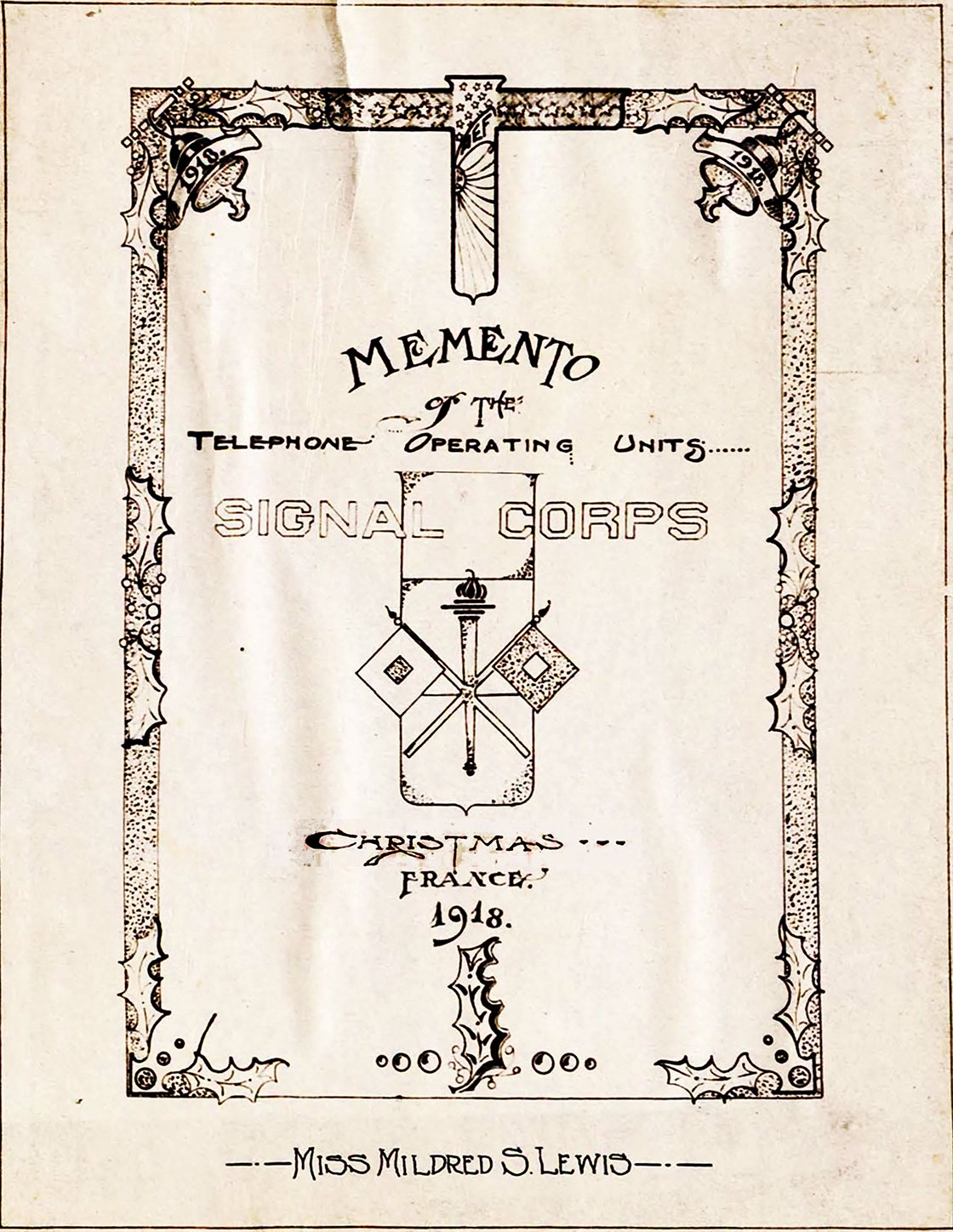
Front Cover, The Memento of the Telephone Operating Units Signal Corps was a commemorative booklet published for the "Hello Girls," a unit of female telephone operators who served in France with the American Expeditionary Force during World War I. This Booklet Provided to Miss Mildred S. Lewis. A.E.F. Signal Corps, 1918. | GGA Image ID # 237a980464. Click to View a Larger Image.
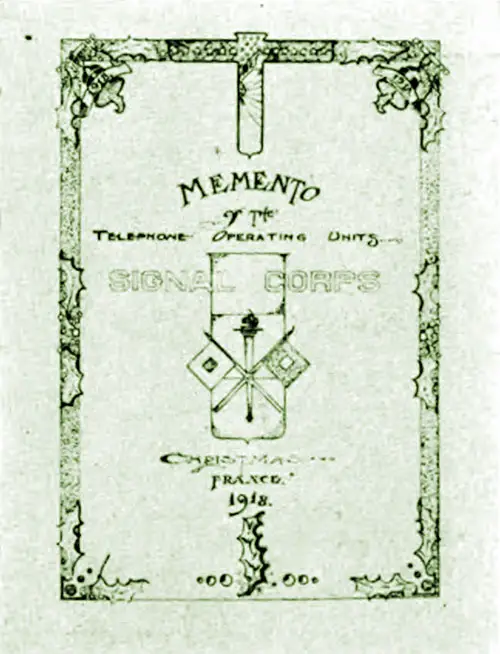
Front Cover Design on Memento Presented to Telephone Operators in France at Christmas, a Memento of the Telephone Operating Unit of the Signal Corps. These Booklets Were Presented at a Special Christmas Dinner Which Was Given to the Operators at Each A. E. F. Exchange Where They Worked. The Telephone Review, April 1919. | GGA Image ID # 198830ff42
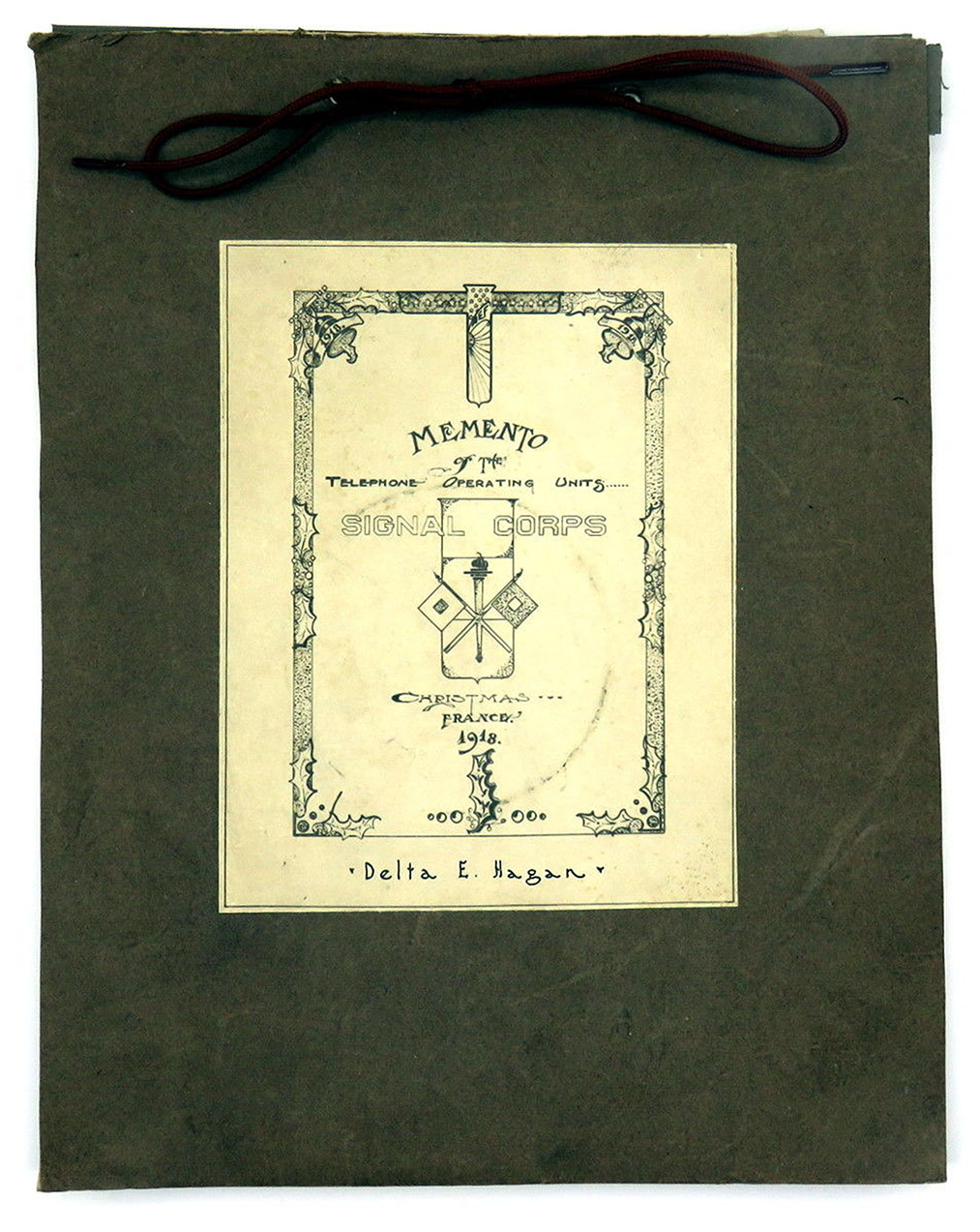
Front Cover of a Memento of the Telephone Operating Units, Signal Corps, Christmas, France, 1918, Presented to Delta E. Hagan, Operator from Unit 6. A.E.F. Signal Corps, 1918. | GGA Image ID # 2379cdfa2a. Click to View a Larger Image.
Physical Description
France: American Expeditionary Forces, 1918. First Edition. Brown cardboard covers with a string tied through two binding holes at the top. 8.5" x 10.75", 34 pp. of facsimile printing and 5 pp. of 6.5" x 8.5" sepia photographs mounted on cardboard. Publisher American Expeditionary Forces, France. This copy was likely sold to a private collector or archives by Montgomery Rare Books.
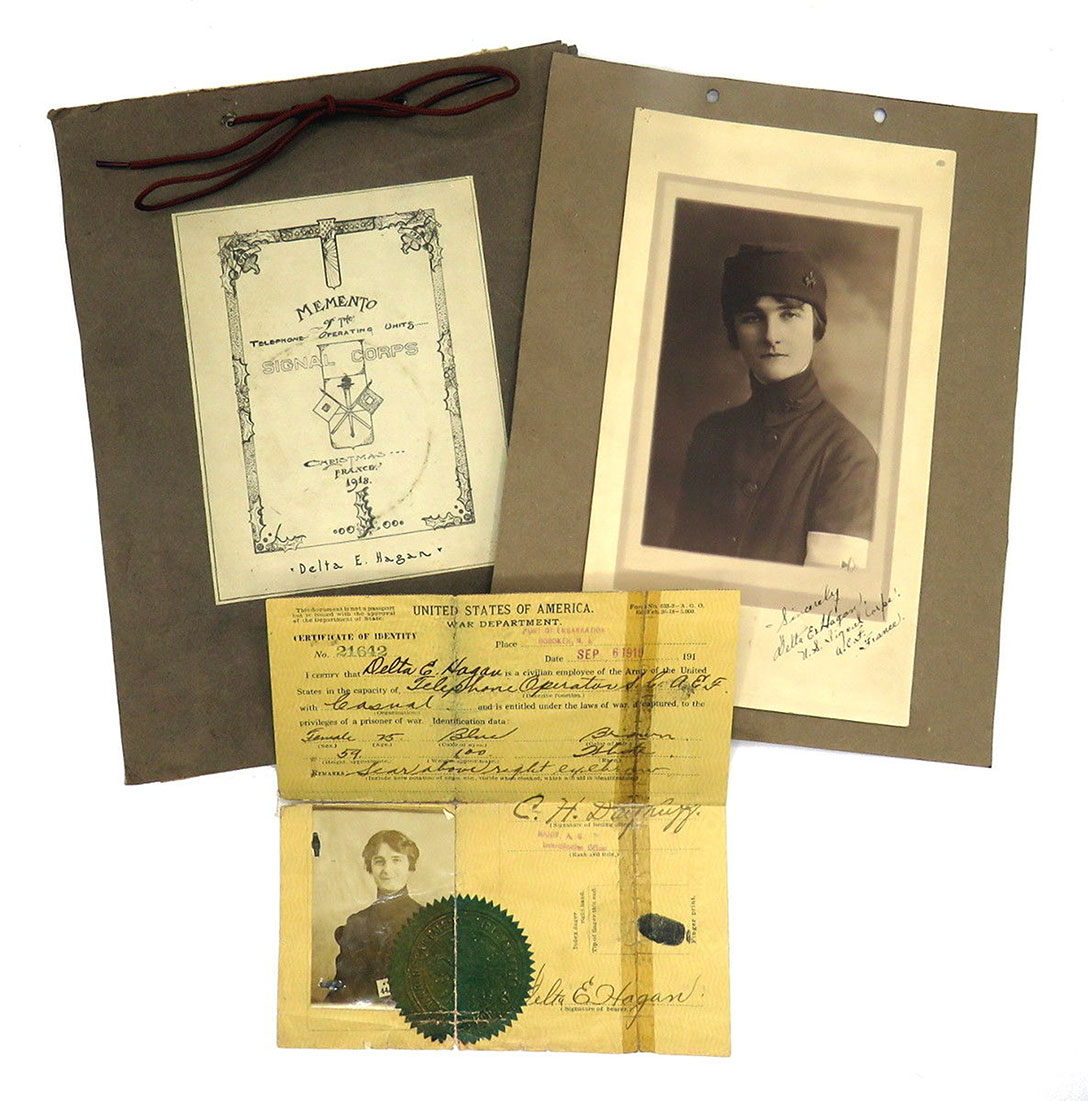
Collage of three items in the Momento Book Provided to Delta E. Hagan by the Soldiers of the A.E.F. Signal Corps, 1918. Items Included Front Cover, a signed photograph of Miss Hagan, and a Certificate of Identity No. 21642 provided to Miss Hagan 6 September 1918. | GGA Image ID # 237ae00754. Click to View a Larger Image.
Publication Information
This is both a commendation book by the leadership of the AEF and a memory book, specifically prepared for the women of WWI who served in the Signal Corps in France during the war. Included therein are more than 50 quotes of congratulations by Generals and Senior Staff Officers.
These women were members of the Signal Corps. They served as telephone operators, using both their telephone and translation skills in 75 locations in France and England. Hence, they were dubbed the 'Hello Girls'. Their role in the war was of immense historical significance.
Photos included in the Memento are of two women at work at the switchboards in Tours and Toul, as well as photos of GEN Pershing, MG James Harbord, and BG E. Russel.
Description Based Upon: A Memento Book that belonged to Delta E. Hagan. Her name is written on the front, and the collection includes two photos of her (a bust photo is also signed) and a rare Identity Certificate. Two additional photographs of the 'Hello Girls' at work and a mailed photographic postcard.
Quote: 'The AEF will cherish among its brightest recollections the picture of this high type of patriotic young American womanhood, which braved the dangers of the sea and faced the vicissitudes and discomforts of service on a distant foreign shore, animated solely by a desire to be of service in the great contest and to help for victory.' MG H. L. Rogers.
See Also: They Would Have Been Shot as Spies: Hidden Perils of the Hello Girls
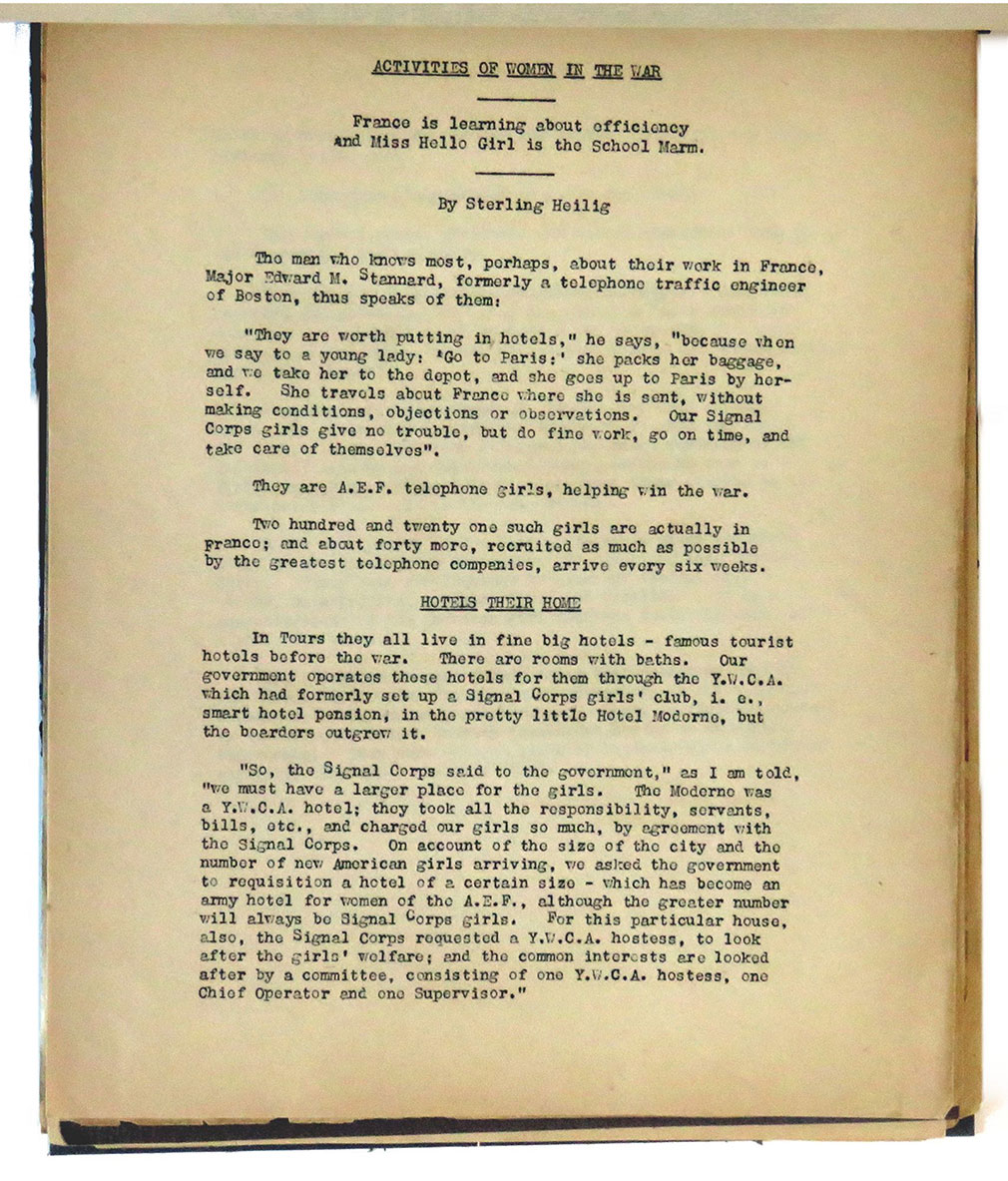
Page From the Momento Book About Activities of Women in the War. “France Is Learning About Efficiency and Miss Hello Girl Is the School Marm. by Sterling Heilig. A.E.F. Signal Corps, 1918. | GGA Image ID # 237ae95ae5. Click to View a Larger Image.
A "Memento of the Telephone Operating Units Signal Corps" is a specific, rare 1918 publication documenting the "Hello Girls," the female telephone operators of World War I, providing a rare, physical connection to their service and struggle for veteran recognition. The 223 women of the Signal Corps Female Telephone Operators Unit served overseas, operating vital switchboards, but were denied veteran benefits and recognition for decades. The memento serves as an artifact of their service and a testament to their ultimately successful fight for veteran status in 1977.
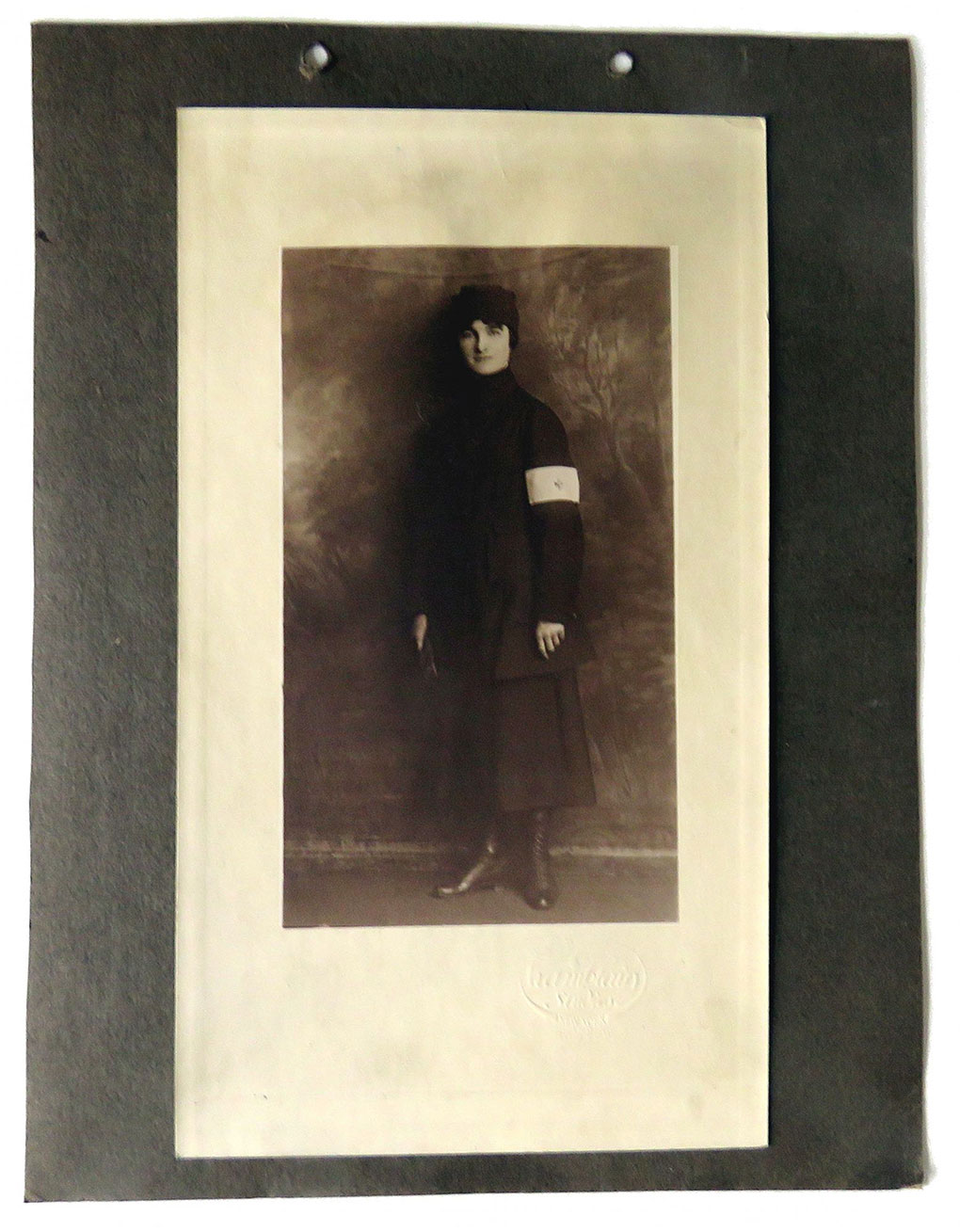
Full-Length Portrait Photograph of Miss Delta E. Hagan, Unit Six Operator, Included in the Memento Book Provided to Her By the A.E.F. Signal Corps, 1918. | GGA Image ID # 237b265769. Click to View a Larger Image.
Back Story
During WWI, General "Black Jack" Pershing realized that his communications were severely hampered by not having English-speaking phone operators. He advertised in major American newspapers the need for female telephone operators.
The selection criteria were a college degree, the ability to speak French, and being unmarried. The women were recruited from the American Telephone & Telegraph Company (AT&T). Over 7,000 applied, and 450 were selected.
They were trained in basic military radio procedures at Camp Franklin, Maryland, now Ft Meade. After training, the women purchased their Army regulation uniform complete with "U. S" crests, Signal Corps crests, and "dog tags". In the spring of 1918, the first thirty-three operators were en route to Europe. They were issued gas masks and steel helmets.
After the Armistice, and upon their return to the U.S., the operators realized that all Army regulations were worded in the 'male' gender, so the women were denied veteran status. Despite wearing regulation uniforms and following all regulations, they were considered civilians working for the Army.
The Chief Telephone Operator, Grace Banker, received the Distinguished Service Medal from the United States Congress.
For years, legislation had been introduced into Congress, but the bills were always buried in committee. One of the operators, Mearle Eagan Anderson, lobbied for 50 years to secure legislation to award the operators veteran's status.
Their struggle for recognition was a long and arduous one. In 1978, President Jimmy Carter signed the bill giving women their deserved recognition and full military benefits, finally serving the justice they had long awaited. (U. S. Army Signal Corps Museum. )
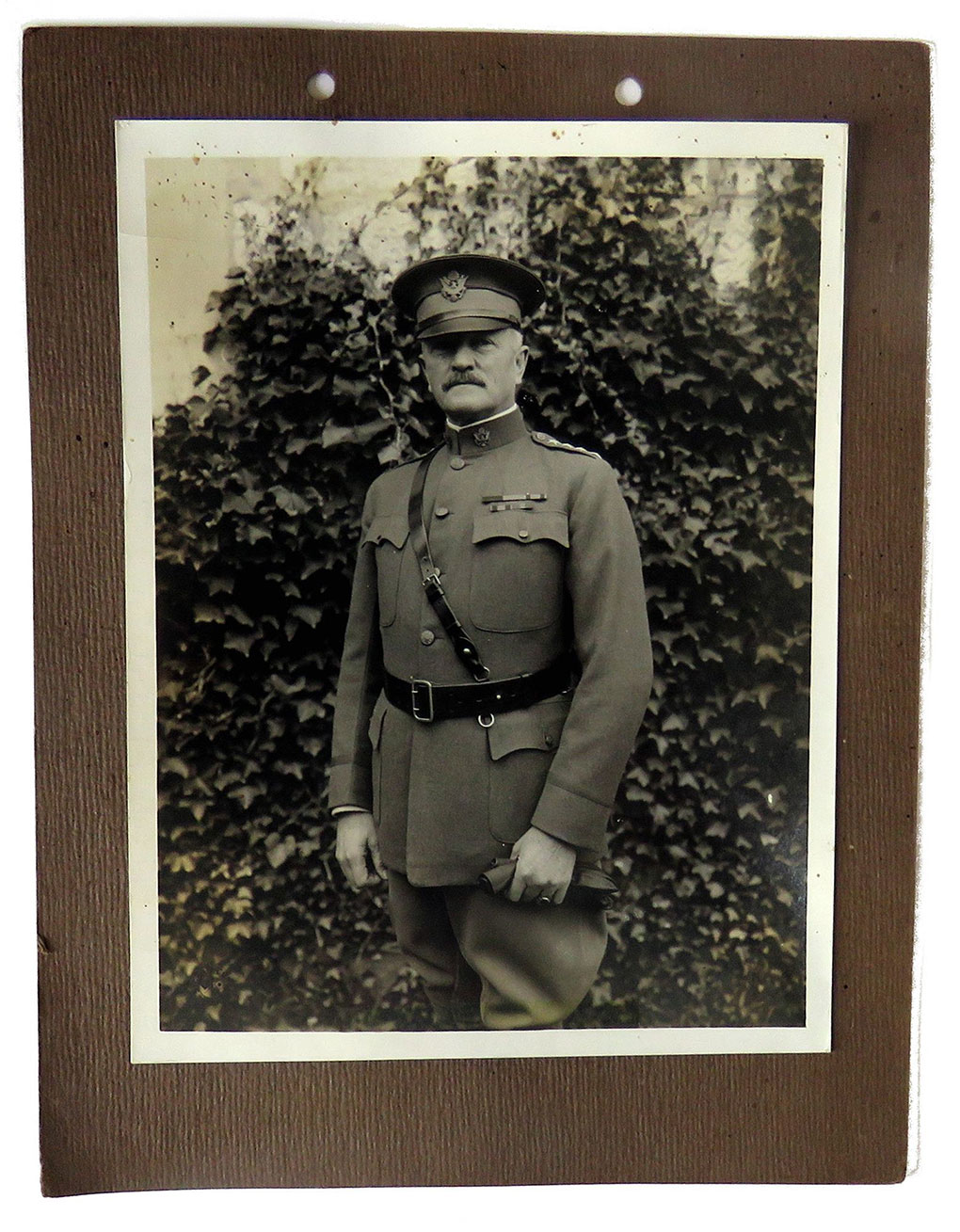
Portrait Photograph of General John J. Pershing Included in the Memento of the Telephone Operating Units, Signal Corps Book, 1918. | GGA Image ID # 237bc4d53b. Click to View a Larger Image.
What the Memento Is
- A Publication: The "Memento of the Telephone Operating Units Signal Corps" is a historical, wartime publication from 1918 produced in France.
- Published: At Christmas, following the end of World War I in 1918.
- Content: The booklet contained testimonials and commendations from officers throughout the military, expressing thanks for the women's service. It also included a short survey of their service and a roster of the operators.
- Purpose: The memento was a heartfelt gift for the operators from Signal Corps officers, who collected the letters and acknowledgements.
- A Connection to the "Hello Girls": It documents the women of the Signal Corps Female Telephone Operators Unit, colloquially known as the "Hello Girls," who were crucial to communications on the Western Front during World War I.
- A Rarity: This 1918 book is a significant and rare item, as the story of the "Hello Girls" was largely forgotten for many years, according to the VA.
- Format: The book was bound in brown cardboard with a string tie.
Why the Memento Matters
- Artifact of History: The memento provides a physical link to these forgotten heroines and their vital wartime role.
- Symbol of Perseverance: It represents the women's contribution and their eventual triumph in achieving long-overdue recognition and veteran status.
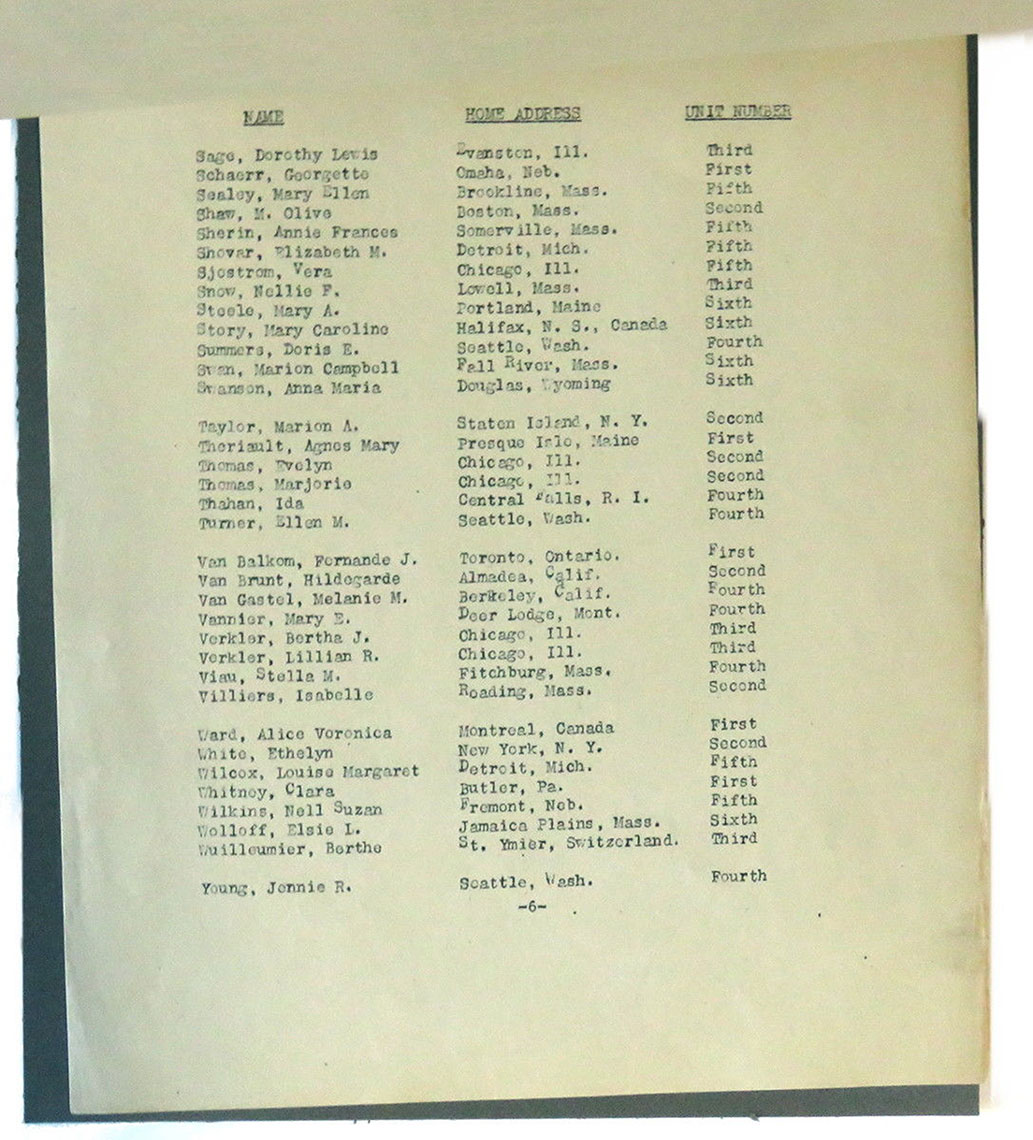
Excerpt from the Momento of the Telephone Operating Units, Signal Corps Book, 1918. This Page Contains a Portion of the Hello Girls Roster, Sage-Young, including Hometown and Unit Assigned To. | GGA Image ID # 237bcc3b74. Click to View a Larger Image.
The Context of the Memento
- Wartime Service: The women were recruited to serve in France as bilingual telephone operators, a critical need for the American Expeditionary Forces (AEF).
- Denial of Veteran Status: Despite wearing Army uniforms and serving under Army regulations, the "Hello Girls" were considered civilian employees by the Army, according to the Smithsonian Institution.
- The Fight for Recognition: Their fight for veteran status and benefits continued for over 60 years until a bill was passed in 1977, granting them recognition.
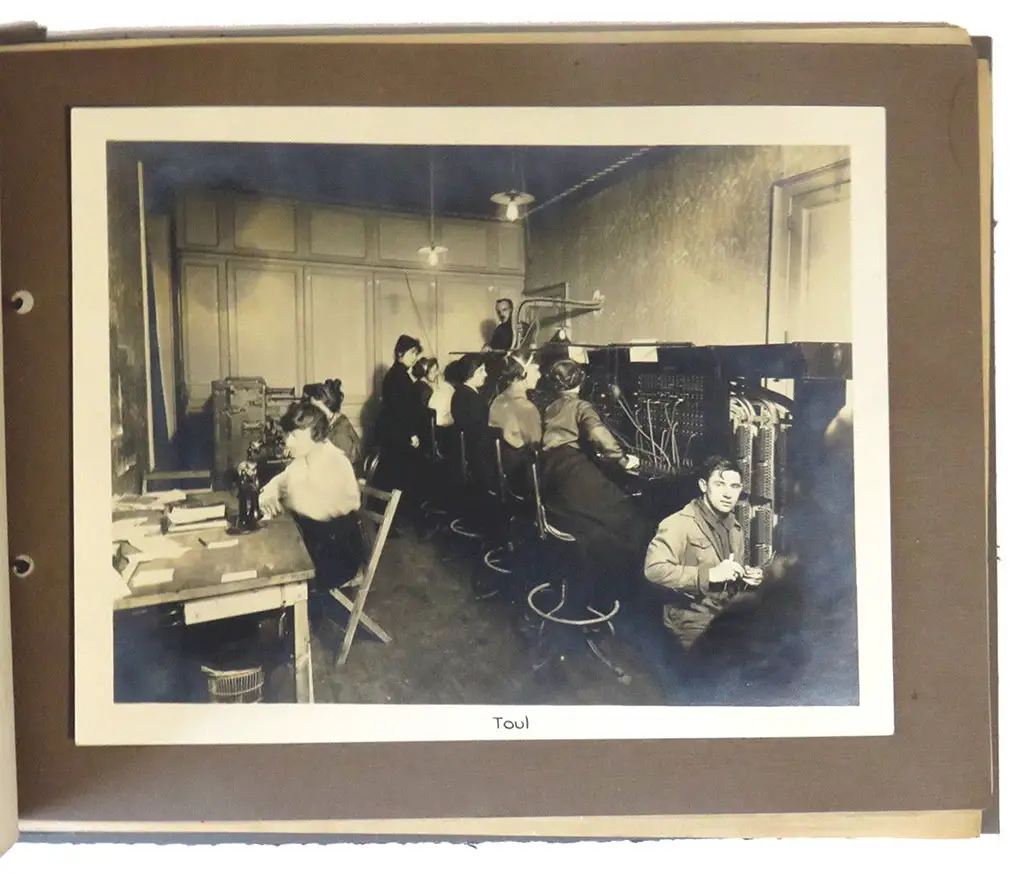
Photograph of the Telephone Operators Working at the Switchboards at Toul, France, That Was Included in the Momento of the Telephone Operating Units, Signal Corps Book, 1918. | GGA Image ID # 237beb0659. Click to View a Larger Image.
🏛️ Legacy & Recognition
The Memento of the Telephone Operating Units – Signal Corps stands as both a celebration of service and a symbol of an injustice that would take nearly sixty years to correct. Each copy was distributed to the U.S. Army’s female telephone operators at Christmas 1918 in France — a gesture of gratitude from the Signal Corps officers who regarded them as comrades in uniform.
Yet, when these same women returned home, they discovered that their Army oath and uniforms did not entitle them to military recognition. For decades they were denied veteran benefits and burial rights, despite having served under military command, in uniform, and under fire.
In 1977, after years of advocacy by surviving operators such as Merle Egan Anderson, Congress passed legislation recognizing the Signal Corps Female Telephone Operators Unit as part of the U.S. Army. President Jimmy Carter signed the bill into law in 1978, finally granting the “Hello Girls” the veteran status they had earned in 1918.
Today, the Memento serves not only as a rare artifact of wartime communication but also as a reminder of perseverance — proof that courage in service often precedes recognition in history.
Images courtesy of a private bookseller who made the 1918 Memento available for public study, preserving access to one of the few surviving copies known to exist. Some of those images are reproduced here.
Related materials: 1977 Senate Hearings on Veteran Recognition | Switchboard Soldiers of the Great War | They Would Have Been Shot as Spies
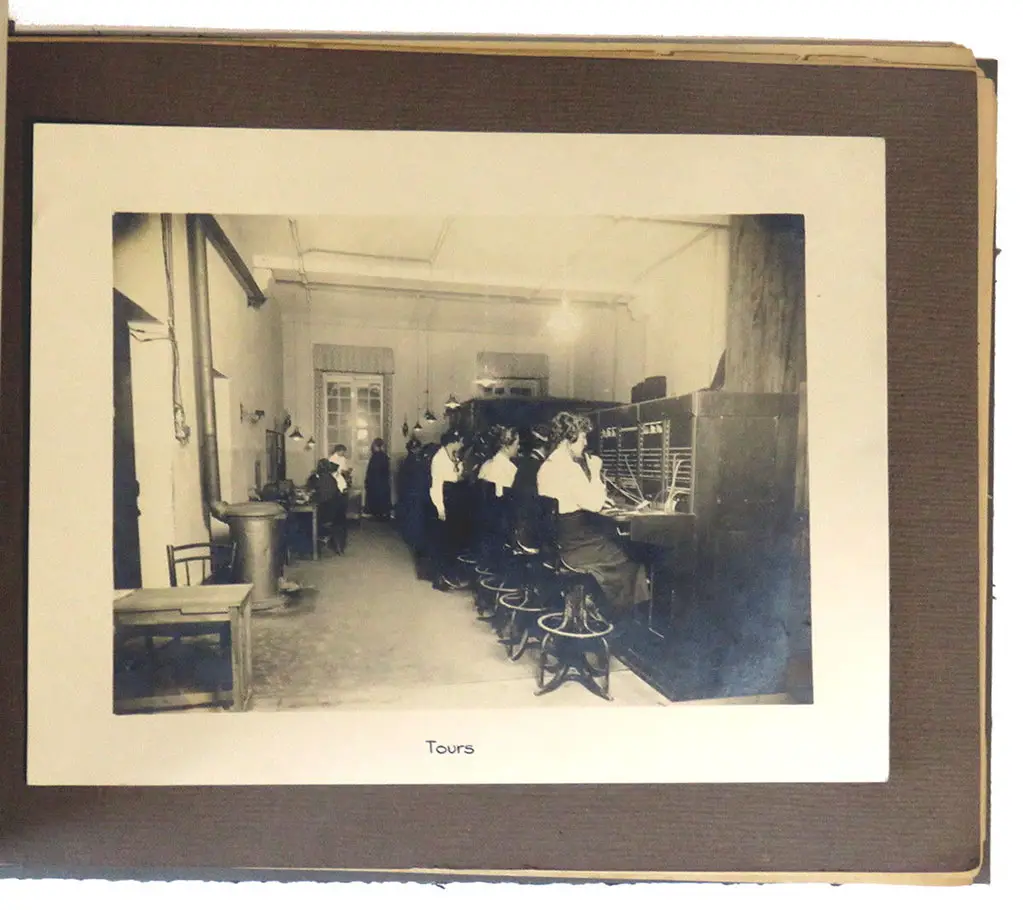
Photograph of Telephone Operators Staioned in Tours, France Operating the Switchboards. Included in the Momento of the Telephone Operating Units, Signal Corps Book, 1918. | GGA Image ID # 237bfde826. Click to View a Larger Image.
Who were the Hello Girls?
- Unit: Officially known as the Signal Corps Female Telephone Operators Unit, they were a group of about 400 American women recruited during WWI.
- Recruitment: With few exceptions, the operators had to be fluent in both French and English.
- Service: Many worked near the front lines in France, maintaining critical telephone communications for the military. They often worked long hours in hazardous conditions, including enduring artillery attacks.
- Disputed status: Despite being sworn into the Army, wearing uniforms, and being subject to military control, the women were retroactively classified as civilians and denied veteran benefits at the end of the war.
- Veteran status: After a decades-long struggle led by operator Merle Egan Anderson and others, surviving Hello Girls were finally granted veteran status in 1978 when President Jimmy Carter signed the necessary legislation.
✨ Most Engaging Content
The most engaging aspect of the Memento of the Telephone Operating Units – Signal Corps is its dual purpose — part souvenir, part official commendation. Within its pages, officers of the American Expeditionary Forces addressed the women directly, expressing respect and gratitude in a tone rarely extended to female personnel at the time.
Each inscription reads as both farewell and validation: an acknowledgment that these women had shared the same dangers, lived under the same orders, and upheld the same discipline as their male counterparts. The inclusion of personal photographs, rosters, and signed notes from operators like Miss Delta E. Hagan transforms what could have been a standard Army report into a deeply human document — a collective remembrance of service, friendship, and pride.
This blend of military formality and heartfelt gratitude makes the Memento a uniquely personal window into the wartime experience of the “Hello Girls,” bridging the gap between official record and lived history.
🖼️ Noteworthy Image(s)
- Front Cover (Miss Mildred S. Lewis Copy): A simple but elegant brown design tied with string, symbolizing the modest dignity of its recipients. | GGA Image ID # 237a980464
- Front Cover Design from The Telephone Review (April 1919): Published stateside, this image announced the Memento’s distribution to the women in France and commemorated their Christmas celebration under Army command. | GGA Image ID # 198830ff42
- Delta E. Hagan’s Personal Copy: Includes her portrait and Identity Certificate No. 21642, connecting the archival object directly to a named operator. | GGA Image ID # 2379cdfa2a
- Photographs of Operators at Work in Toul and Tours, France: Rare candid images showing female Signal Corps members managing switchboards under combat-zone conditions. | GGA Image IDs # 237beb0659, # 237bfde826
Together, these visuals transform the Memento from an abstract publication into a tangible record of the women’s presence and professionalism on the Western Front.
📘 Mini Dictionary for Civilians
- Signal Corps: The branch of the U.S. Army responsible for communications, including telegraph, telephone, and radio during World War I.
- American Expeditionary Forces (A.E.F.): The U.S. Army formation sent to Europe under General John J. Pershing during World War I.
- Memento: In military usage, a keepsake publication or souvenir produced to commemorate a campaign, service, or special occasion — often distributed to troops or units.
- Telephone Operator (Signal Corps): An enlisted role performed by women trained to manage battlefield switchboards and multilingual communications between Army headquarters and front-line units.
- Veteran Status (1978): Legal recognition granted by Congress, affirming that the women of the Signal Corps Telephone Operators Unit were soldiers of the U.S. Army — not civilian contractors.
🎓 Essay Prompts for Students
- How does the Memento of the Telephone Operating Units – Signal Corps reflect the changing role of women in the U.S. military during World War I?
- In what ways did the production and distribution of the Memento serve as both recognition and consolation for the women of the Signal Corps?
- Examine the significance of personal artifacts like Delta E. Hagan’s signed copy of the Memento in shaping our understanding of history. What can these individual items reveal that official records cannot?
- Discuss how the long delay in granting veteran status to the Hello Girls reveals broader societal attitudes about gender and service in the early 20th century.
- Compare the tone of the 1918 Memento to the tone of the 1977 Senate Hearings that finally acknowledged these women as veterans. How did the language of recognition evolve?
🪶 Citation Block
Chicago: “Memento of the Telephone Operating Units – Signal Corps (1918).” Hello Girls Documents Collection. Gjenvick-Gjønvik Archives, 2025. ggarchives.com.
APA: Gjenvick-Gjønvik Archives. (2025). Memento of the Telephone Operating Units – Signal Corps (1918). Milwaukee, WI: GG Archives.
MLA: “Memento of the Telephone Operating Units – Signal Corps (1918).” Hello Girls Documents Collection, Gjenvick-Gjønvik Archives, 2025. ggarchives.com.
Student Version: “Memento of the Telephone Operating Units – Signal Corps (1918).” Gjenvick-Gjønvik Archives (2025). ggarchives.com.
