
Telephone Operators Denied War Risk Insurance - 1918
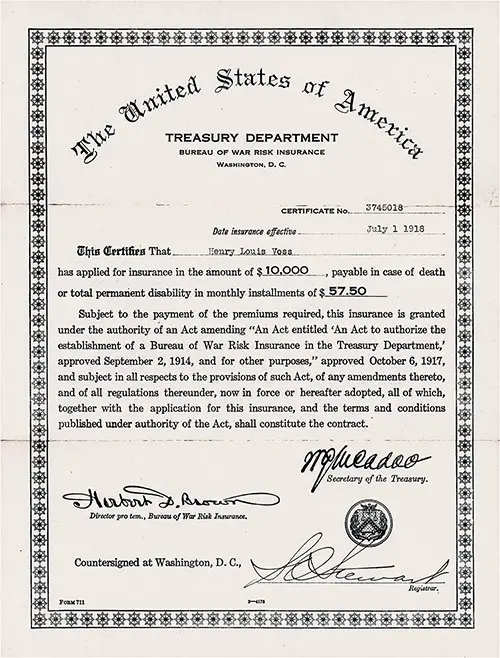
Example of a War Rick Insurance Certificate the the Hello Girls, Female Telephone Operators Attached to the Signal Corps of the United States Army Had Hoped to Obtain. | GGA Image ID # 19a2af42fe
📖 Foreword
During World War I, the U.S. Army's bilingual telephone operators—later known as the "Hello Girls"—worked under military discipline and were deployed close to the front, in some cases within twenty-three miles of the firing line.5 Yet the Army classified them as civilian employees, which placed them outside the protections of the War Risk Insurance Act.31 In response, the YWCA War Work Council urged Congress to close this gap—communicating with key committee chairs—and the U.S. House approved language to extend coverage, but the Senate removed it before enactment.24
This document captures that 1918 moment when policy lagged behind service, showing how administrative classification limited access to wartime benefits and foreshadowed the much later fight for full recognition.
📖 Review & Summary
What this document shows: In May–June 1918, the Young Women's Christian Associations (YWCA) War Work Council endorsed an amendment to the War Risk Insurance Act to cover U.S. Army Signal Corps telephone operators (the "Hello Girls").1 A resolution supporting the change was sent to Senate Finance Chair F. M. Simmons and House Interstate & Foreign Commerce Chair Thetus W. Sims.2
- Why insurance was denied: The Army classified the operators as civilian employees without military status, so they fell outside the statute's benefits.3
- Hazard without coverage: Despite lacking insurance, units were posted "within twenty-three miles of the firing line," reflecting real exposure to wartime risks.5
- Legislative outcome in 1918: The House approved language to insure women officially designated as overseas telephone/telegraph operators, but the Senate removed the provision before enactment.4
Bottom line: The page documents a 1918 attempt to correct a gap in protection for the Hello Girls—illustrating how administrative classification shaped access to wartime benefits.
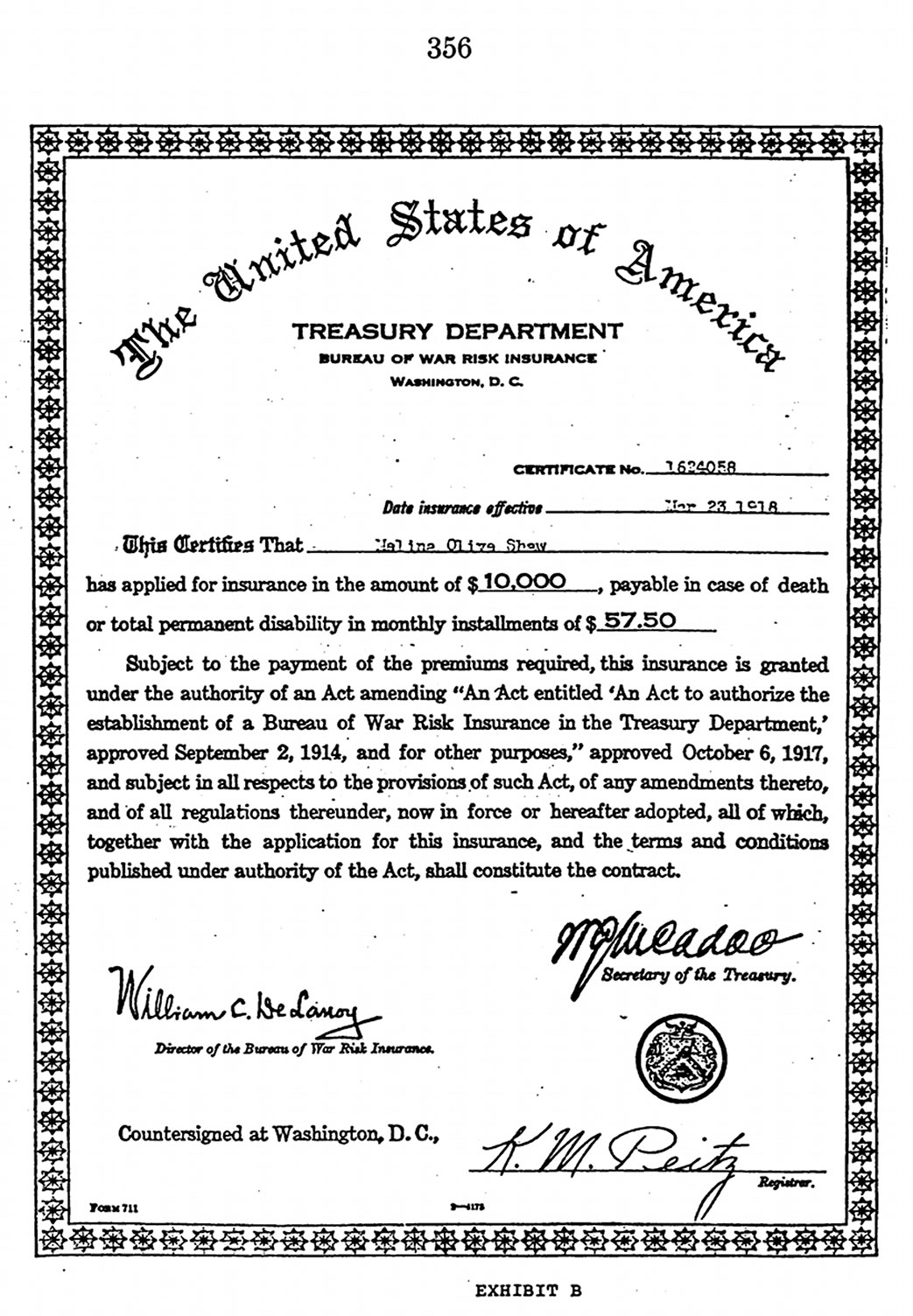
Exhibit B, War Risk Insurance Certificate for Maline Olive Shaw, 23 March 1918. Recognition for Purposes of VA Benefits, 1977. GGA Image ID # 19aaf2f979. Click to View a Larger Image.
An amendment to the War Risk Insurance Act now before Congress, which provides for proper war insurance for telephone operators has received the hearty endorsement of the War Work Council of the National YWCA
A resolution embodying this endorsement has been sent to Senator F. M. Simmons, chairman of the Finance Committee of the Senate, and to Hon. Thetus W. Simms, chairman of the Interstate and Foreign Commerce Committee of the House of Representatives.
The rating of telephone operators who are with the American Expeditionary Forces in France, as “civilian employees with no military status,” was responsible for their not coming under the provision of the War Risk Insurance Act, and for their not being entitled to any of its benefits.
Although this situation exists, the women telephone operators are being sent within twenty-three miles of the firing line and are subject to all dangers that follow the line men, engineers and other types of Signal Corps workers.
A unit of twenty-eight telephone girls headed by Miss Nellie Snow of Lowell, Massachusetts, chief operator, remained for several days previous to their sailing, at the National Training School of the YWCA, which adjoins the National Board building, in New York City.
In June 1918, the House of Representatives passed a bill authorizing war risk insurance for "women serving by official designation with the Army in the American overseas forces as telephone and telegraph operators", however that provision was deleted by the Senate
✨ Most Engaging Content
Hook: "Within twenty-three miles of the firing line"—but no war-risk insurance. The Hello Girls' coverage was blocked because they were labeled civilians, even as they handled urgent calls for the A.E.F.5
- Key contrast: Military discipline and uniforms vs. civilian classification.
- Turning point: YWCA's national advocacy pushed Congress to act—partially.1
- Why it matters: It foreshadows the decades-long fight for full recognition and benefits.
🖼️ Noteworthy Image(s)
Featured document: War Risk Insurance Certificate (1 July 1918), U.S. Bureau of War Risk Insurance — an example of the coverage the Hello Girls sought but were denied under their 1918 status.1
Alt-text suggestion (editorial): "Example War Risk Insurance certificate issued in 1918; the Hello Girls were ineligible due to Army civilian classification."6
Exhibit B: War Risk Insurance Certificate for Maline Olive Shaw, dated 23 March 1918, that would pay $10,000 upon Death or $57.50 per Month if Permanently Disabled.
📘 Mini Dictionary for Civilians
- War Risk Insurance Act
- U.S. wartime program (1914, expanded 1917) that provided family allotments, disability/death compensation, and optional low-cost life insurance to those with qualifying service.1
- YWCA War Work Council
- The YWCA's national wartime arm that supported women workers and advocated policy changes, including protections for the Hello Girls in 1918.1
- A.E.F.
- American Expeditionary Forces—U.S. troops deployed to Europe in World War I.
- Civilian employee (Army)
- A worker under contract to the Army but not in the military service; different pay, benefits, and discharge rules applied in 1918.3
- Firing line
- Colloquial WWI term for the active combat zone at or near the front. The document notes deployments "within twenty-three miles" of this area.5
🎓 Essay Prompts for Students
- Policy vs. Reality: How did the "civilian" classification of the Hello Girls shape (or distort) their access to wartime protections, given where and how they served?
- Advocacy & Outcomes: Evaluate the YWCA War Work Council's 1918 strategy. Why did the House provision advance while the Senate removed it?
- Risk & Recognition: Compare the risks faced by the Hello Girls near the front to their contemporaries who received insurance. What does this reveal about gender and military status in 1918?
- Legacies: In what ways did the 1918 insurance debate foreshadow later fights for veteran status and benefits?
🪶 Citation Block (Chicago, APA, MLA + student version)
Chicago Notes & Bibliography (note):
"War Work Bulletin, No. 32 (New York: Young Women's Christian Associations, May 31, 1918)."
Chicago Bibliography:
Young Women's Christian Associations. War Work Bulletin. No. 32. New York, May 31, 1918.
APA (7th ed.):
Young Women's Christian Associations. (1918, May 31). War Work Bulletin (No. 32).
MLA (9th ed.):
Young Women's Christian Associations. "War Work Bulletin." No. 32, 31 May 1918.
Student version (plain-language):
War Work Bulletin, No. 32 (YWCA), May 31, 1918.
War Work Bulletin, New York: Young Womens Christian Associations, No. 32, 31 May 1918
End Notes
- War Risk Insurance Act (1914; expanded 1917). In WWI it provided family allotments, disability/death compensation, and optional low-cost life insurance to qualifying personnel. The YWCA War Work Council sought to extend these protections to the Hello Girls in 1918. ↩︎ ↩︎ ↩︎ ↩︎ ↩︎
- Names & titles in 1918. Senator Furnifold McLendel (F. M.) Simmons chaired the Senate Finance Committee; Representative Thetus W. Sims chaired the House Interstate and Foreign Commerce Committee. Some period sources and later transcriptions vary the spelling (e.g., "Simms"). ↩︎
- Civilian classification. The Army treated the Hello Girls as civilian contract employees (not enlisted), which excluded them from military benefits in 1918. Subsequent recognition took decades to resolve. ↩︎ ↩︎
- House vs. Senate (June 1918). As reported at the time, the House passed language to authorize war-risk insurance for women serving by official designation overseas as telephone/telegraph operators; the Senate later removed that provision. ↩︎
- "Within twenty-three miles of the firing line." This phrase appears in 1918 reporting about the operators' proximity to combat zones and the risks they faced under A.E.F. control. ↩︎ ↩︎ ↩︎
- Alt-text cleanup. If desired, correct typos in the existing image alt text ("War Risk" and "the Hello Girls … had hoped to obtain") for clarity and accessibility. ↩︎
