
"Hello Girls" Press, Public Perception & Cultural Impact

Page 20, Hello Hartford! War Hello Girls Talking: We Win! If the Message of Victory Could Be Telephoned From France, Signal Service Operators Training Here for Service Overseas, Would Plug in Capitol City in Record Time—Girl Brigade Awaiting Call to Help Pershing’s Army, Studying Under Military Discipline—War Not New to Some of Company— “Win the War,” Their Motto. The Hartford Daily Courant, Sunday, 18 August 1918, Page 20. | GGA Image ID # 2375f89f53. Click to View a Larger Image.
📖 Review & Summary
The Hello Girls Press Collection offers a vivid window into how the American public first learned about—and celebrated—the women of the U.S. Army Signal Corps during World War I. Between 1918 and 1920, newspapers and trade journals from Boston to San Francisco chronicled their training, service, and return home, portraying them as both patriotic professionals and cultural pioneers.
Through these original press features, readers can trace the evolution of public perception—from early curiosity about women “going to the front” to admiration for their skill, endurance, and composure under fire. Many of the articles emphasized not only their technical ability at the switchboard but also their discipline, linguistic fluency, and moral strength, qualities that redefined what women could contribute in wartime.
Collectively, these reports reveal how the Hello Girls became symbols of modern American womanhood—bridging the home front and the front lines, proving that courage, intelligence, and service transcended gender. Their press coverage helped lay the groundwork for later recognition of women’s military roles and the long campaign for equal veterans’ status.
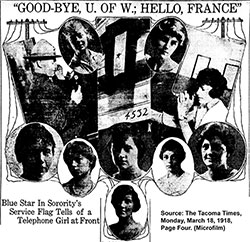 Good Bye U of W, Hello France – 1918
A spirited Tacoma Times feature celebrating University of Washington students who volunteered as Signal Corps telephone operators bound for France. Their story captures the moment when education, patriotism, and women’s service intersected during WWI.
Published 18 March 1918 | The Tacoma Times | GG Archives Hello Girls Press Collection.
-250.jpg "GGA Image ID #19bbe8be74") Berlin, Connecticut Girl to Go as Phone Operator (1918)
Berlin, Connecticut Girl to Go as Phone Operator (1918)
A Hartford Courant article announcing the enlistment of Miss Elizabeth Rockwell Roby—a
Smith College graduate and AT&T instructor—into the U.S. Signal Corps as a telephone operator bound for France.
Her story reflects the educational and professional achievements of the early “Hello Girls”,
whose technical expertise and linguistic training were vital to wartime communications. Published March 1918 | The Hartford Courant | GG Archives Hello Girls Press Collection.
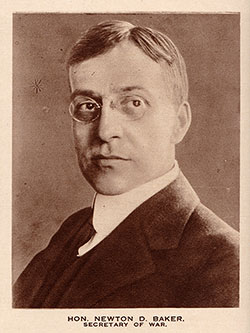 Baker Congratulates Telephone Operators (1918)
In this Telephone Review feature, U.S. Secretary of War Newton D. Baker publicly commended the Signal Corps “Hello Girls” for their skill and discipline under wartime pressure.
The article includes Baker’s praise alongside letters from Grace D. Banker, Ester Fresnel, and Georgette Schaerr—firsthand accounts of
Atlantic crossings, early days in France, and the proud professionalism of America’s first women soldiers. Published May 1918 | The Telephone Review | GG Archives Hello Girls Press Collection.
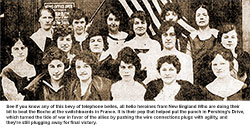 Hello—Over There! – Our Telephone Girls Take On Paris – 1918
American telephone girls in France—adored by the French and respected by the U.S. Army—balanced military discipline with social grace while keeping the lines open for General Pershing’s forces. Featuring Chief Operator Mary Snow of Massachusetts and YWCA leader Katherine Fox, this article highlights how courage, professionalism, and camaraderie defined the “Hello Girls” serving abroad.
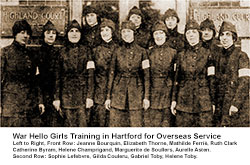 War Hello Girls Talking: We Win! (1918)
A vivid Hartford Courant feature introducing the multilingual women of the U.S. Army Signal Corps training in Hartford, Connecticut, for overseas service.
The article profiles operators such as Catherine Byram, Jeanne Bourquin, and Helene Champrigand—young women whose intelligence, discipline, and optimism made them national symbols of wartime professionalism. Published 18 August 1918 | The Hartford Courant | GG Archives Hello Girls Press Collection.
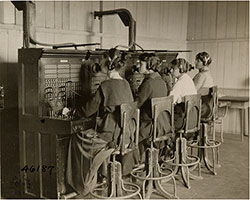
What New England Hello Girls Are Doing “Over There” - 1918
A spirited feature from the Boston Sunday Post capturing letters and anecdotes from New England’s Hello Girls in France — their humor, hardships, and heroism while serving General Pershing’s army in World War I.
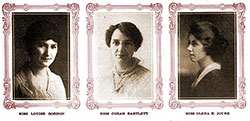
Three More Michigan Girls For “Over There” - 1918
This Bell Telephone News feature proudly announced the enlistment of three Michigan telephone operators—Louise Gordon, Corah Bartlett, and Oleda Joure—for service in the U.S. Army Signal Corps. A lighthearted morale piece, it celebrated professionalism, community pride, and the expanding role of women in wartime communications.
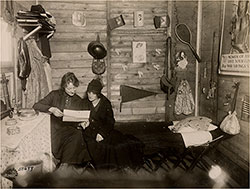 Bay Area Girls at the Front During Great Drives (1918)
An inspiring Oakland Tribune feature recounting how Bertha Matignon Hunt, Helen Hill, Marie Lange,
and Adele Hoppock—trained in San Francisco—served near the front lines during
the St. Mihiel and Meuse-Argonne offensives.
Their letters describe life in makeshift barracks, long hours at the switchboard, and the camaraderie
that defined America’s first women soldiers. Published December 1918 | Oakland Tribune | GG Archives Hello Girls Press Collection.
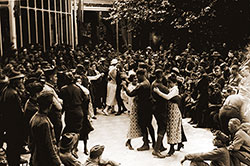
YWCA Dances Relieve Stress for Signal Corps Girls – 1918
A cheerful 1918 Courier-Journal feature describing how YWCA-sponsored gatherings in France brought laughter, music, and camaraderie to America’s Signal Corps “Hello Girls,” easing the strain of wartime communications work.
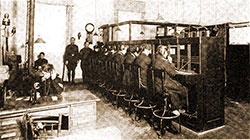 American Telephone Girls Well Cared for in France (1918)
A Chicago Tribune feature describing how YWCA leader Mary A. Dingman organized care and recreation for the American telephone operators serving with the U.S. Army Signal Corps in France.
The article details YWCA rest homes, including an island retreat on the Loire River at Tours, offering comfort and respite to the pioneering “Hello Girls” and WAACs stationed near the front. Published September 1918 | Chicago Tribune / Bell Telephone News | GG Archives Hello Girls Press Collection.
 Chicago Telephone Girls Heroines “Over There” (1918)
A dramatic Bell Telephone News feature describing how Chicago-trained Signal Corps “Hello Girls” stayed at their posts as their barracks burned in the Moselle region.
Their courage earned admiration across the American Expeditionary Forces. Published November 1918 | Bell Telephone News | GG Archives Hello Girls Press Collection.
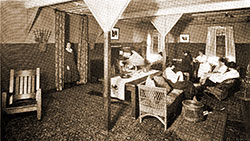
Phone Girls Living High - 1918
A 1918 feature from the Boston Sunday Post describing the refined living conditions of U.S. Army Signal Corps “Hello Girls” stationed in France. Supported by the Y.W.C.A., these operators were housed in scenic châteaux, reflecting both their officer-like status and the respect afforded to their essential wartime service.
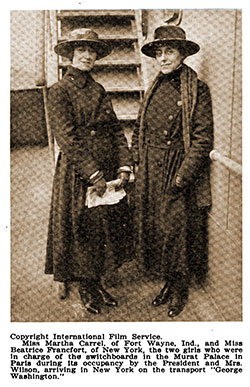
The Signal Corps Girls "Made Good" – 1919
A 1919 Bell Telephone News feature honoring the U.S. Army Signal Corps “Hello Girls.” Brigadier General E. Russel commended their courage and efficiency under fire, establishing a standard of service that proved vital to Allied communications success in WWI.
CORNERSTONE PIECE
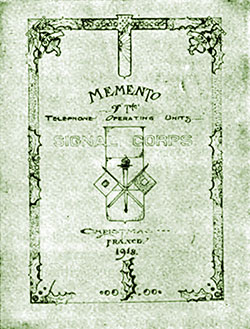
Tribute to American Telephone Operators in France - 1919
A postwar feature describing the heartfelt Christmas commendations presented to the Hello Girls of the U.S. Army Signal Corps. Featuring praise from Generals Pershing, Harbord, and Russel, the article captures the gratitude and admiration felt across the American Expeditionary Forces.
This article references the rare 1918 Memento of the Telephone Operating Unit, a Christmas booklet presented to every Signal Corps “Hello Girl,” now among the most valuable surviving artifacts of their wartime service.
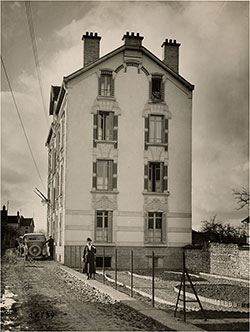 American “Hello Girls” in France Enjoy High Life (1919)
This post-Armistice feature describes life for the U.S. Army Signal Corps “Hello Girls” stationed at Chaumont and Toul, France.
Living in converted French chateaux, these women balanced duty and comfort—operating switchboards by day and hosting gatherings that lifted soldiers’ morale by night.
Illustrated with National Archives photographs, the article reveals how professionalism and camaraderie defined America’s first women soldiers overseas. Published 14 April 1919 | The Greenville News | GG Archives Hello Girls Press Collection.
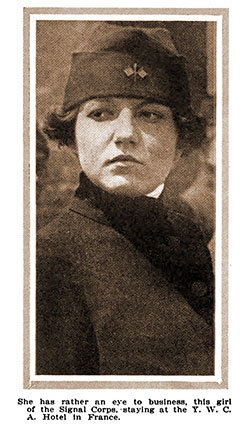 Blue Triangle Follows the Switchboard (1919)
An inspiring postwar feature on the YWCA’s “Blue Triangle” partnership with the U.S. Army Signal Corps “Hello Girls”. It explores how the YWCA housed, supplied, and supported telephone operators
working near the front lines and with the Army of Occupation in Germany. Published April 1919 | Southern Telephone News | GG Archives Hello Girls Press Collection.
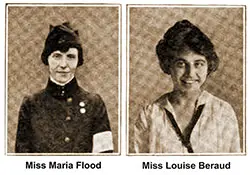
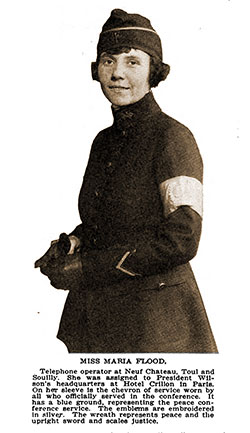 Peace Secrets Elude Miss Maria Flood – 1919
Maria Flood of Chicago, niece of humorist Finley Peter Dunne, served as a U.S. Army Signal Corps telephone operator at Souilly and later at the Paris Peace Conference, where she managed calls for President Woodrow Wilson with remarkable integrity.
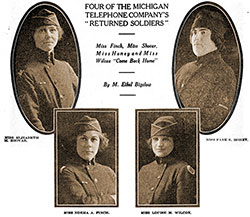 Four of The Michigan Telephone Company’s “Returned Soldiers” (1919)
A Bell Telephone News feature highlighting four Michigan women who served as Signal Corps
telephone operators in France. Their dedication and service represent the enduring legacy of the
“Hello Girls” who connected the American forces overseas. Published November 1919 | Bell Telephone News | GG Archives Hello Girls Press Collection.
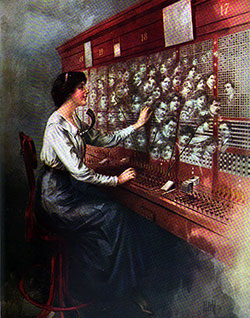 "Hello" Heroines – Telephone Operators of the Great War Era (1920)
Lucy Calhoun’s feature in The Green Book Magazine spotlights the bravery and professional skill of the American Signal Corps “Hello Girls,” whose work linked battles and hearts across continents.
🪶 Citation Block
Chicago Style: “Press, Public Perception & Cultural Impact of the WWI ‘Hello Girls.’” Gjenvick-Gjønvik Archives – GG Archives. Last modified 2025. https://www.ggarchives.com/MIL/HelloGirls/Press/index.html.
APA Style: Gjenvick-Gjønvik Archives. (2025). Press, Public Perception & Cultural Impact of the WWI “Hello Girls.” Retrieved from https://www.ggarchives.com/MIL/HelloGirls/Press/index.html
MLA Style: “Press, Public Perception & Cultural Impact of the WWI ‘Hello Girls.’” Gjenvick-Gjønvik Archives – GG Archives, 2025, www.ggarchives.com/MIL/HelloGirls/Press/index.html.
Student Version (Simple): “Press & Public Perception of the WWI Hello Girls.” GG Archives Collection (https://www.ggarchives.com/MIL/HelloGirls/Press/index.html).
Repository Information
The Gjenvick-Gjønvik Archives (GG Archives) is cataloged with the Library of Congress under MARC Org Code: WiMfGGA and ISIL: US-wimfgga.
Current location:
N91W16562 Pershing Ave, #1
Menomonee Falls, Wisconsin 53051-2170, USA
Note: Historic addresses listed in earlier MARC records include Marietta, GA and Woodstock, GA. These appear in authority files but are no longer active.
