
🎬 Navy on Film – Carrier, Submarine & Surface Warship Movies (1940–2010)
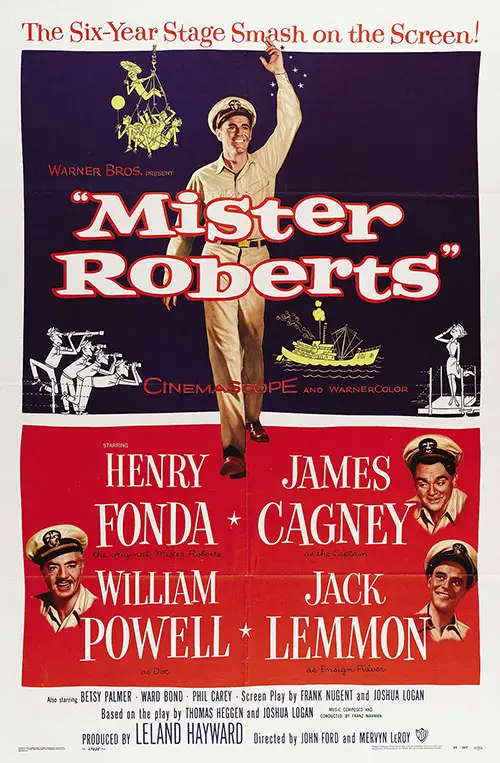
Movie Poster, Mister Roberts (1955) Starring Henry Fonda, James Cagney, William Powell, and Jack Lemmon. [Public Domain (Note 1)] Warner Bros. | GGA Image ID # 23517d6e86
🎯 Film Topics Covered
This visual guide helps students and researchers understand U.S. Navy roles through films. Pair each title with GG Archives cruise books, rosters, and training materials to compare portrayal vs. reality.
🚢 Aircraft Carrier Operations & Leadership on Film
🎞️ Film Title: Top Gun (1986)
Roles: Naval Aviator, CAG, LSO, Flight Instructors, Deck Handlers
Overview: Showcases elite pilot training at “Top Gun” with dramatic air combat sequences and intense classroom scenes. Highlights the pilot-instructor dynamic, call signs, and carrier operations. Centers on elite pilot training and showcases command structures aboard aircraft carriers. Though dramatized, it introduced millions to naval aviation roles and generated strong recruitment interest.
Classroom Use: Sparks discussion on training pipelines, military culture, and leadership under pressure. Good film to introduce CAG/LSO roles. Compare depicted roles to actual duties as defined in Carrier Roles.
Pair With: Carrier Roles, Ranks & Roles, and Glossary (Call Sign)
🎞️ Film Title: Top Gun: Maverick (2022)
Roles: Naval Aviator, Air Wing leadership, Deck Crews, Instructor Pilots
Overview: A modern continuation, emphasizing aging leadership, mentorship, and emerging combat technologies. Offers updated visuals of catapults, jet launch systems, and real carrier ops. Offers an updated look at deck crew coordination and fast jet operations.
Classroom Use: Compare to original *Top Gun* for evolution of training, tactics, and command structure. Useful for discussions on how training adapts over time. Discuss leadership transition and mentorship themes.
Pair With: Carrier Roles, Officer Career Paths
🎞️ Film Title: Midway (1976 & 2019)
Roles: CAG/CVW, CO/XO, Pilots, Deck Crew, Intelligence Staff
Overview: Two different portrayals of the pivotal WWII battle. The 1976 version blends actual footage with dramatization; the 2019 film uses CGI to retell air strikes and coordination across carriers. Dramatizations of the pivotal WWII Pacific battle. Highlights coordination between commanders, aviators, and deck operations.
Classroom Use: Compare film accuracy and historical storytelling across generations. Evaluate intelligence briefings, command decisions, and risk.
Pair With: WWII Navy sources and Carrier Roles.
🎞️ Film Title: Tora! Tora! Tora! (1970)
Roles: Staff command, Flag Officers, Intelligence, Carrier Strike Groups, Fleet Coordination, Air Operations Planning
Overview: A meticulous depiction of the Pearl Harbor attack from both American and Japanese perspectives. Demonstrates staff officer roles in strategic command. Explores breakdowns in communication and early air strike coordination.
Classroom Use: Study fleet readiness, intelligence gaps, and war planning dynamics. Analyze how command structures can fail during surprise attacks. Good for introducing fleet-level command.
Pair With: Historical Evolution and Carrier Roles
🎞️ Film Title: The Final Countdown (1980)
Roles: CO/XO, Air Boss, Air Wing Officers, Deck Operations
Overview: Science fiction meets naval operations as a modern carrier time-travels to 1941. While fictional, it showcases shipboard hierarchy and launch procedures. Useful in showcasing late Cold War carrier layout and operations.
Classroom Use: Great for identifying the Air Boss, Handler, and XO roles under fictional pressure. Although fictional, helpful for visualizing command hierarchy and flight deck rhythm on a modern carrier (USS Nimitz).
Pair With: Carrier Roles, Glossary, USS Nimitz Cruise Book
🎞️ Film Title: The Bridges at Toko-Ri (1954)
Roles: Naval Aviators, LSO, Rescue Swimmers, and carrier crew during Korean War
Overview: A Korean War-era film about mission stress, post-WWII military expectations, and the burdens on aviators. Humanizes the experience of jet pilots flying dangerous missions off Korea. Balances combat intensity with life aboard the carrier.
Classroom Use: Discuss Cold War context and aviator mental health. Discuss psychological toll on carrier pilots and peacetime vs. wartime tension in early Cold War.
Pair With: Carrier Roles and Officer Career Paths
🛳️ Submarine Warfare, Strategy & Sonar Teams
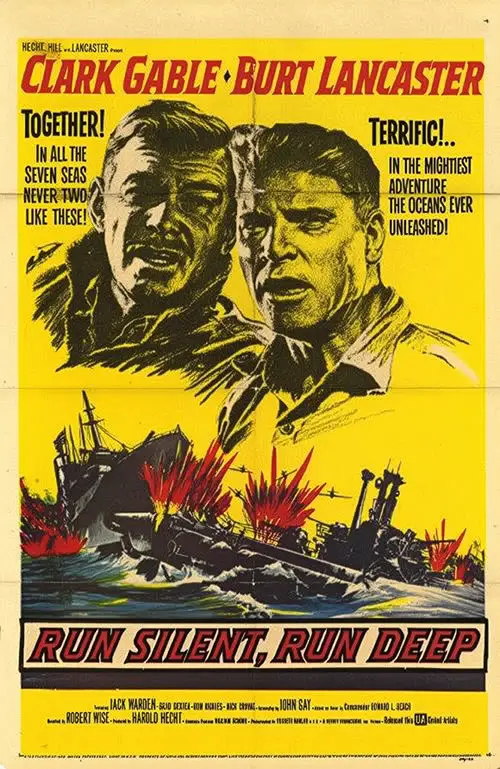
Movie Poster, Run Silent, Run Deep Starring Clark Gable and Burt Lancaster, 1958. [Public Domain (Note 1)] United Artists | GGA Image ID # 23510e010e
🎞️ Film Title: Run Silent, Run Deep (1958)
Roles Portrayed: Commanding Officer (CO), Executive Officer (XO), torpedo room crew, sonar ops.
Overview: A dramatic WWII submarine story exploring tension between senior and junior officers on a high-stakes Pacific patrol. Focuses on leadership, tactics, and personal ambition.
Classroom Use: Ideal for discussing WWII submarine warfare and leadership dilemmas. Encourages analysis of Navy command structure and wartime decision-making under stress.
Pair With: Silent Service, Officer Career Paths
🎞️ Film Title: The Hunt for Red October (1990)
Roles Portrayed: CO, XO, sonar specialists, political liaison, naval strategists.
Overview: A Cold War thriller showcasing submarine navigation, sonar warfare, and U.S.–Soviet geopolitical tension. The film illustrates decision-making aboard a nuclear submarine and the psychological game of cat-and-mouse in the Atlantic.
Classroom Use: Useful for Cold War history and for comparing submarine crew duties to surface operations. Highlights realistic roles such as sonar technicians and navigation officers.
Pair With: Silent Service, Glossary
🎞️ Film Title: Crimson Tide (1995)
Roles Portrayed: CO, XO, Combat Systems Officer, Chief of the Boat (COB), comms staff.
Overview: Centers on a power struggle aboard a nuclear missile submarine during a communications blackout. Highlights leadership conflict and the tension between protocol and personal judgment.
Classroom Use: Promotes ethical debates about military command, nuclear deterrence, and following lawful orders. Great for leadership and JAG discussions.
Pair With: Ranks & Roles, Officer Indoctrination
🎞️ Film Title: U-571 (2000)
Roles Portrayed: Engineering crew, boarding party, sonar ops, cryptographers.
Overview: Loosely based on real events, this film follows an American sub crew sent to capture an enemy Enigma code machine. Known for historical inaccuracies, but showcases many technical roles.
Classroom Use: Useful for discussions of naval intelligence operations, codebreaking, and Hollywood license in historical storytelling.
Pair With: Cryptology sources, WWII intel films, Silent Service
🎞️ Film Title: Hunter Killer (2018)
Roles Portrayed: CO, sonar analysts, navigation officers, SEAL rescue team.
Overview: A fictional yet modern portrayal of submarine operations and joint special operations to prevent international conflict. Touches on geopolitics, tech, and tactical decision-making.
Classroom Use: Good for comparing legacy Cold War roles with contemporary submarine operations and inter-service collaboration.
Pair With: Navy SEALs, Silent Service
🎞️ Film Title: Operation Petticoat (1959)
Roles Portrayed: Supply Officer, Engineering, CO/XO, female evacuees.
Overview: A lighthearted look at logistical and personnel challenges during WWII, inspired by true events. Features a pink submarine and highlights women temporarily aboard.
Classroom Use: Opens conversation about morale, logistics, and humor as survival tools. Discuss in contrast with serious submarine films.
Pair With: Women at Sea, Silent Service
🎞️ Film Title: The Enemy Below (1957)
Roles Portrayed: U.S. destroyer and German U-boat COs, sonar teams, CIC watch.
Overview: A psychological thriller that humanizes both sides of WWII sub-surface warfare. Known for balanced portrayal and cat-and-mouse tactics.
Classroom Use: Useful for comparative leadership, sonar tactics, and diplomacy themes.
Pair With: Silent Service, Carrier Roles
🎞️ Film Title: The Wolf’s Call (2019)
Roles Portrayed: Sonar analysts, CO, nuclear weapons protocols team.
Overview: A French film praised for its realism. Highlights split-second acoustic detection and modern nuclear response dilemmas.
Classroom Use: Encourages international comparison of submarine operations. Suitable for naval strategy, ethics, and sonar technology discussions.
Pair With: NATO/France naval cooperation materials, Silent Service
🎞️ Film Title: Das Boot (1981)
Roles Portrayed: German U-boat crew: CO, Engineering, Communications, Sonar.
Overview: A highly authentic German film showing the claustrophobia and tension aboard a WWII U-boat. Offers deep emotional and psychological insight.
Classroom Use: Excellent for role immersion, enemy empathy, and comparative naval history. A masterclass in atmospheric storytelling.
Pair With: Silent Service, submarine operations during WWII
⚓ Surface Warships, Destroyers & Escort Duty
🎞️ Film Title: Greyhound (2020)
Roles Portrayed: Commanding Officer, Sonar Team, Combat Information Center (CIC), Gunnery Officers, Helmsmen.
Overview: A WWII North Atlantic convoy escort thriller based on real events. Follows a destroyer captain defending against German U-boats under continuous threat. Realistic depiction of wartime tension and tactical ship maneuvers.
Classroom Use: Ideal for discussing Battle of the Atlantic, convoy tactics, sonar operations, and real-time decision-making on destroyers.
Pair With: Silent Service, Ranks & Roles
🎞️ Film Title: The Caine Mutiny (1954)
Roles Portrayed: CO, XO, Legal Counsel, CIC Watch, Deck Crews.
Overview: A psychological and legal drama aboard a Navy minesweeper. Focuses on leadership under pressure, mental fitness for command, and the chain of command.
Classroom Use: Excellent for discussing Navy leadership responsibilities, military justice, and officer accountability. Ideal for civic, JROTC, or leadership programs.
Pair With: Officer Career Paths, Glossary
🎞️ Film Title: Mister Roberts (1955)
Roles Portrayed: XO, CO, Medical Officer, Crew Division Leaders.
Overview: A comedic and poignant portrayal of life aboard a Navy supply ship during WWII. Explores morale, ambition, leadership style, and wartime bureaucracy.
Classroom Use: Great for exploring non-combat Navy life, morale, interdepartmental dynamics, and the struggle between personal values and military duty.
Pair With: Women at Sea (contextual), Ranks & Roles
🎞️ Film Title: Sink the Bismarck! (1960)
Roles Portrayed: Fleet Command, Intelligence Officers, Gunnery Teams, Naval Aviators.
Overview: A dramatized account of the British Royal Navy’s pursuit and sinking of Germany’s largest battleship. While not U.S. Navy-focused, this film parallels strategic planning, command decision-making, and destroyer action relevant to WWII surface warfare.
Classroom Use: Perfect for teaching command strategy, battleship-era naval warfare, and British-American naval cooperation. Useful for discussions of fleet coordination, command under pressure, and technology like sonar and radar.
Pair With: Compare Royal Navy roles to U.S. Navy destroyer escorts in WWII-era convoy protection documents, or similar roles on Pacific destroyers and cruisers. WWII carrier/destroyer materials, Carrier Roles
🎞️ Film Title: The Bedford Incident (1965)
Roles Portrayed: Captain (CO), XO, Sonar Officers, NATO political observers, Medical Officer, CIC Watch, Weapons Officers.
Overview:A Cold War psychological thriller portraying a U.S. Navy destroyer stalking a Soviet submarine. Highlights command intensity, rules of engagement, and the dangers of brinkmanship. Focuses on command stress, nuclear protocols, and unintended escalation.
Key Takeaway: Offers insight into Cold War tension, CIC (Combat Information Center) roles, and escalation risks.
Classroom Use: Ideal for Cold War era strategy, escalation theory, and chain of command breakdowns. Sparks discussions on nuclear responsibility and psychological readiness.
Pair With: Pair With: GG Archives Cold War cruise books or any articles related to Cold War naval readiness. Silent Service, Officer Indoctrination
🎞️ Film Title: USS Indianapolis: Men of Courage (2016)
Roles Portrayed: Commanding officer (CO), Crew Divisions, Quartermasters, Ship's Doctor, Gunners, Signalmen, Survivors, Rescue Teams.
Overview: Recounts the sinking of the USS Indianapolis after delivering atomic bomb parts and the tragic ordeal of the surviving crew. Based on real events and historical records.
A dramatization of the USS Indianapolis disaster, which involved a secret mission delivering atomic bomb components and the subsequent torpedoing and survival ordeal of its crew.
Focus Roles: Communications breakdown, lack of escort protection, survival leadership, medical triage at sea
Classroom Use: Powerful story for survivor analysis, command duty, and postwar reflection. Includes themes of accountability, shark attacks, and naval legacy. Explores themes of sacrifice, leadership failure, survival, and the U.S. Navy’s post-war introspection.
Pair With: Historical write-ups or cruise books related to WWII Pacific Fleet, primary source discussions on accountability in military justice, Silent Service, and oral histories or shipboard survival accounts.
🎓 Boot Camp, Specialty Schools & Training
🎞️ Film Title: Men of Honor (2000)
Roles Portrayed: Navy Divers, Chief Petty Officers, Navy Medical Personnel, Instructors.
Overview: The story of Carl Brashear, the first African American to become a U.S. Navy Master Diver. Highlights racial barriers, grit, and the mentorship of a tough but principled Chief Petty Officer.
Classroom Use: Excellent for discussions about military integration, leadership, resilience, and enlisted–chief mentorship culture.
Pair With: Chiefs & NCO Leadership, Women at Sea (as an example of overcoming barriers).
🎞️ Film Title: Annapolis (2006)
Roles Portrayed: Midshipmen, Instructors, Naval Officers in training, Drill Cadre.
Overview: A fictionalized view of life at the U.S. Naval Academy, following a young man's struggle to survive the physical and emotional demands of officer training.
Classroom Use: Use to spark dialogue around officer commissioning, training intensity, and the character arc from civilian to future leader. Pair with real-life commissioning resources to contrast Hollywood vs. reality.
Pair With: Officer Career Paths, Enlisted to Officer Pathways
📚 Using Films in the Classroom – Interpretations, Comparisons & Teaching Tools
📚 Using Films in the Classroom
U.S. Navy-themed films provide an engaging and accessible way to introduce complex topics in naval leadership, operations, and shipboard life. However, cinematic portrayals often dramatize roles, streamline training, and simplify command structure for storytelling purposes. This section outlines how teachers and students can use these films effectively—especially when paired with primary sources from the GG Archives.
🎯 Identify Naval Roles
Encourage students to recognize and define key U.S. Navy roles commonly depicted in film. Examples include:
- Executive Officer (XO): Second-in-command, responsible for discipline and daily operations.
- Air Boss: Directs flight deck and air operations on aircraft carriers.
- CAG / CVW Commander: Leads the Carrier Air Wing and coordinates with the ship’s CO.
- LSO (Landing Signal Officer): Guides aircraft during carrier landings; crucial to air wing safety.
- Chief Petty Officers (CPOs): Bridge between officers and enlisted, often depicted as mentors or disciplinarians.
- Deck Crews: Responsible for fueling, arming, launching, recovering, and maintaining aircraft or deck equipment.
📖 Compare to Primary Sources
Use historical documents from the GG Archives to validate or contrast film portrayals. Examples include:
- Cruise Books: Great Lakes, Coral Sea, and Essex cruise books show real-life photos of flight deck teams, Chiefs, and officer bios.
- Roster Listings: Help confirm roles, ranks, and departmental structures as presented in the films.
- Training Yearbooks & Manuals: Support understanding of the indoctrination process and early military education that shaped those depicted on screen.
🎥 Discuss Accuracy vs. Artistic License
Hollywood productions often compress timelines, exaggerate conflict, or assign one character multiple duties to fit narrative constraints. Ask students:
- Are these roles realistically portrayed based on what you've learned from primary sources?
- Does the film highlight or ignore critical support roles such as communications, medical, engineering?
- How does the dramatization affect public perception of military life or leadership?
- Are female sailors, minority roles, or Chief leadership accurately represented?
🔗 Pair With GG Archives Resources
Link films with related GG Archives reference pages to deepen understanding:
- Ranks, Ratings & Roles
- Carrier-Specific Roles
- Glossary of Naval Terms
- Officer Career Progression
- Chiefs & NCOs
- Boot Camp to Fleet: USNTC Pathways
- Women at Sea
✍️ Sample Assignments
- Compare one role: Film depiction vs. archival cruise book entry.
- Analyze leadership style: CO or XO in film vs. evaluation excerpts from real naval officers (when available).
- Research project: Choose a real ship featured in film and create a visual or written timeline using GG Archives documents.
🏫 Audience Suitability
- Middle & High School (Grades 8–12): Ideal for civics, history, or film/media studies courses.
- College/University: Used for military sociology, U.S. history, or leadership studies.
- Veteran & Public Engagement: Screening events or oral history projects linked with archived materials.
Note: Some films contain language or violence that may be inappropriate for younger audiences. Preview and assign accordingly.
Note 1: An online search by title at the US copyright office did not find a copyright renewal. In the absence of renewal of the US copyright, this poster art entered the public domain 28 years after its US publication date.
