
Adele Louise Hoppock, Operator
Quick Facts
- Unit: Three
- Deployed: The third group that was led by Chief Operator Nellie F. Snow made the crossing on the RMS Baltic on April 25, 1918.
- Repatriated:
- Hometown at Time of Enlistment: Seattle, Washington
- Original Hometown (if Known):
- Education:
- Occupation at Enlistment:
- Lifespan: 29 September 1897 - 23 September 1967
- Remarks: Group No. 3 consists of girls who have been given intensive emergency training in telephony. These girls, for the most part, come from New York State. California and Massachusetts sent the next largest numbers. Seventy-two percent are Americans; 28 percent are foreign-born—French, Belgian, Canadian, English, Swiss, and Dutch East Indian. (Birth of the AEF Signal Corps Girls - 1918)
Articles and Documents on GG Archives
"Hello Girls" Documents & Reference Materials
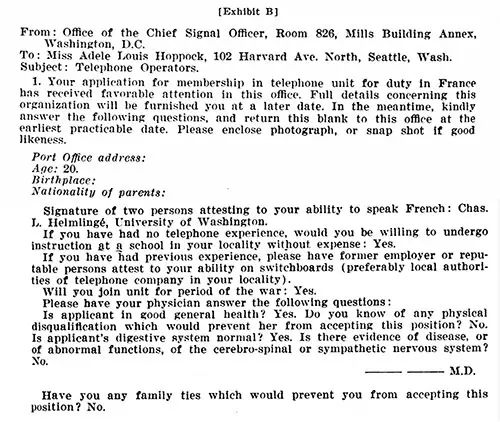
Application for Membership in the Signal Corps Telephone Unit (1918)
How the Army recruited and screened bilingual operators for service in France. Features Exhibit B with Adele L. Hoppock’s questionnaire—language attestations, medical fitness, instruction pledge, and wartime commitment.
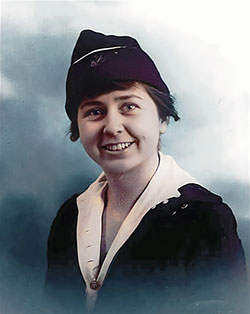
223 Women of the U.S. Army Signal Corps Telephone Operators Overseas (1918–1919)
Explore the earliest compiled roster of 223 “Hello Girls,” the U.S. Army Signal Corps telephone operators who served overseas during World War I.
Based on 1918–1919 press and Signal Corps reports, this list reflects the original wartime recognition of these women’s service and leadership.
Includes names, operating units, and select period photographs—an invaluable snapshot of how the women of the Signal Corps were viewed during the war itself.
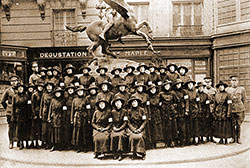
Roster and Hometowns of the WWI “Hello Girls” – U.S. Army Signal Corps Telephone Operators (1918–1920)
Explore the complete roster of 223 women and two men who served as U.S. Army Signal Corps telephone operators during World War I.
Organized by unit and hometown, this list reveals the national and international scope of the bilingual operators who kept the American Expeditionary Forces connected across France.
This roster serves as a cornerstone for genealogists, educators, and historians researching the pioneering women who made military communications possible.
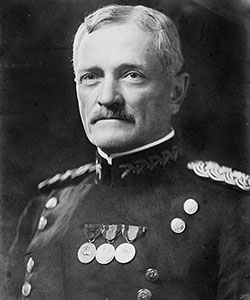
Exhibit H — Pershing’s Commendation of Signal Corps Operators (1918)
Dated 20 November 1918, this concise commendation credits “the officers and men and the young women of the Signal Corps” for wartime communications—an A.E.F.-level nod that explicitly includes the Hello Girls.
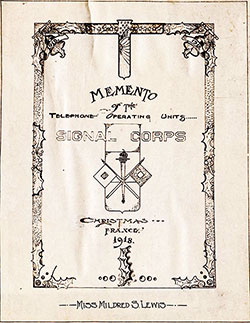
Memento of the Telephone Operating Units – Signal Corps (1918)
Explore the rare commemorative booklet presented to the U.S. Army’s “Hello Girls” at Christmas 1918 in France—filled with officer commendations, photographs, and personal keepsakes.
This artifact offers a tangible link between the women’s frontline service and their later fight for veteran recognition.
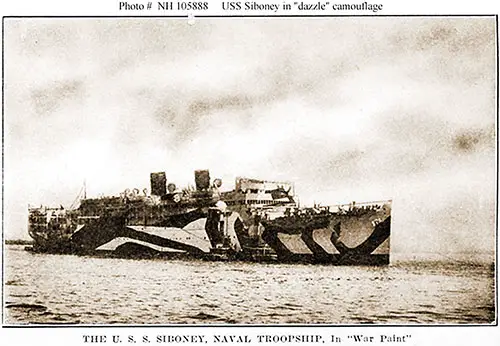
Exhibit L — Special Orders No. 231 (1919)
Demobilization orders from Base Section No. 5 (Brest/Cherbourg) list named Signal Corps Telephone Operators—among them Adele L. Hoppock—as “no longer required” in the A.E.F. and direct their return to the U.S. by first available government transport. The hero shows USS Siboney, a typical troopship outbound from Brest in August 1919.
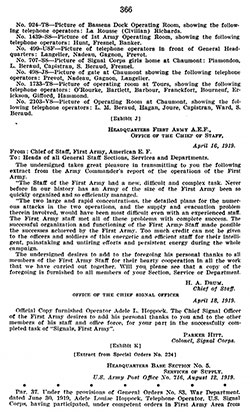
Exhibit J — Extract from First Army Commander’s Report (1919)
After-action praise from Headquarters, First Army credits staff work—planning, supply, evacuation, and signals—for St. Mihiel and Meuse–Argonne successes. A signed note from Col. Parker Hitt personally thanks Operator Adele L. Hoppock, offering rare, named recognition of a Hello Girl at the Army level.
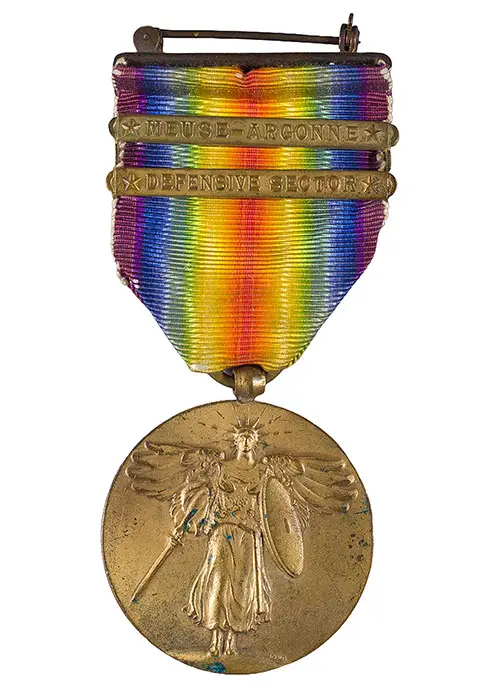
Exhibit K — Special Orders No. 2241 (1919)
Official orders authorize Operator Adele L. Hoppock to wear the WWI Victory Medal with a Defensive Sector clasp and campaign credit for Meuse–Argonne—a precise, primary-source record tying a Hello Girl to America’s largest WWI operation.
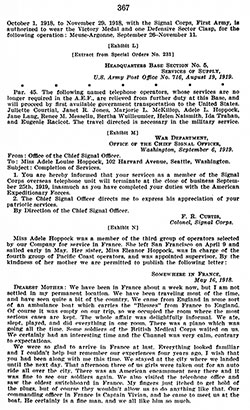
Exhibit M — Termination of Services (Adele L. Hoppock), 1919
A curt War Department notice ends Hoppock's overseas Signal Corps service effective Sept. 25, 1919, closing with appreciation conveyed strictly "by direction" of the Chief Signal Officer—an icy coda to a year of frontline communications work.
Source: U.S. Senate Hearing, Recognition for Purposes of VA Benefits (1977), p. 367.
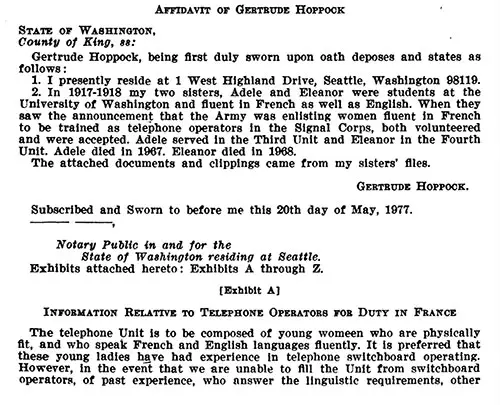
Affidavit of Gertrude Hoppock (1977)
A sister’s sworn statement lodging exhibits from Adele (Unit 3) and Eleanor (Unit 4) Hoppock—evidence used in the 1977 hearings to recognize the Hello Girls as U.S. Army veterans.
Introduction & Context
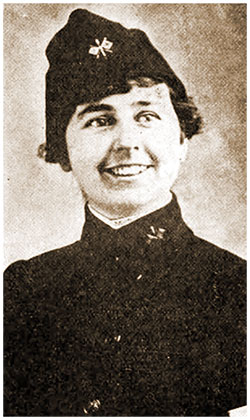
Birth of the AEF Signal Corps "Hello Girls" (1918)
From Pershing's 1917 cable to first sailings in early 1918—how the Army built a bilingual, high-throughput switchboard force, what they wore, where they worked, and how they were supported.
Introduction & Context · Last updated: 2025
- Bay Area Girls at Front During Great Drives - 1918
- Birth of the AEF Signal Corps Girls - 1918
- 223 Women of the U.S. Army Signal Corps Telephone Operators Who Served Overseas (1918-1919)
- Third Unit of Telephone Operators Arrive in France - 1918
Photographs
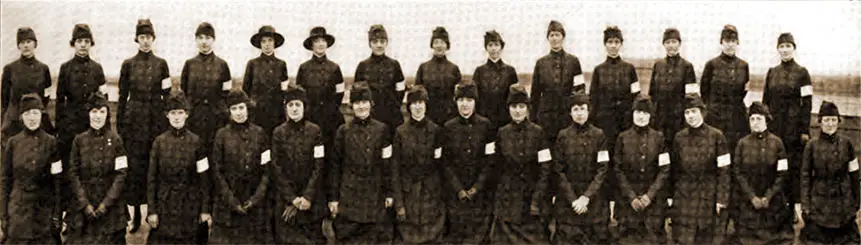
Third Unit of Telephone Operators to Go to France to Serve with General Pershing behind the Allied Lines and Help Carry on the Business of War. The Telephone Review, May 1918. | GGA Image ID # 19225056a1. Click to View a Larger Image.
External Resources
Repository Information
The Gjenvick-Gjønvik Archives (GG Archives) is cataloged with the Library of Congress under MARC Org Code: WiMfGGA and ISIL: US-wimfgga.
Current location:
N91W16562 Pershing Ave, #1
Menomonee Falls, Wisconsin 53051-2170, USA
Note: Historic addresses listed in earlier MARC records include Marietta, GA and Woodstock, GA. These appear in authority files but are no longer active.
