
Yvonne R. Haas, Operator
Quick Facts
- Unit: Seven
- Deployed: Group 7 was ready to board ships for France when the Armistice was declared, so they did not deploy; however, all had volunteered, were fully trained, and were ready to serve in combat.
- Repatriated:
- Hometown at Time of Enlistment:
- Original Hometown (if Known):
- Education:
- Occupation at Enlistment:
- Lifespan:
Articles and Documents on GG Archives
"Hello Girls" Documents & Reference Materials
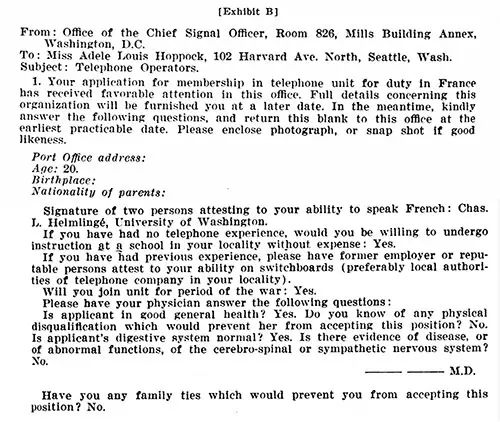
Application for Membership in the Signal Corps Telephone Unit (1918)
How the Army recruited and screened bilingual operators for service in France. Features Exhibit B with Adele L. Hoppock’s questionnaire—language attestations, medical fitness, instruction pledge, and wartime commitment.
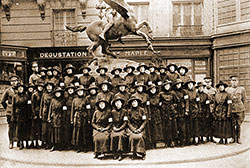
Roster and Hometowns of the WWI “Hello Girls” – U.S. Army Signal Corps Telephone Operators (1918–1920)
Explore the complete roster of 223 women and two men who served as U.S. Army Signal Corps telephone operators during World War I.
Organized by unit and hometown, this list reveals the national and international scope of the bilingual operators who kept the American Expeditionary Forces connected across France.
This roster serves as a cornerstone for genealogists, educators, and historians researching the pioneering women who made military communications possible.
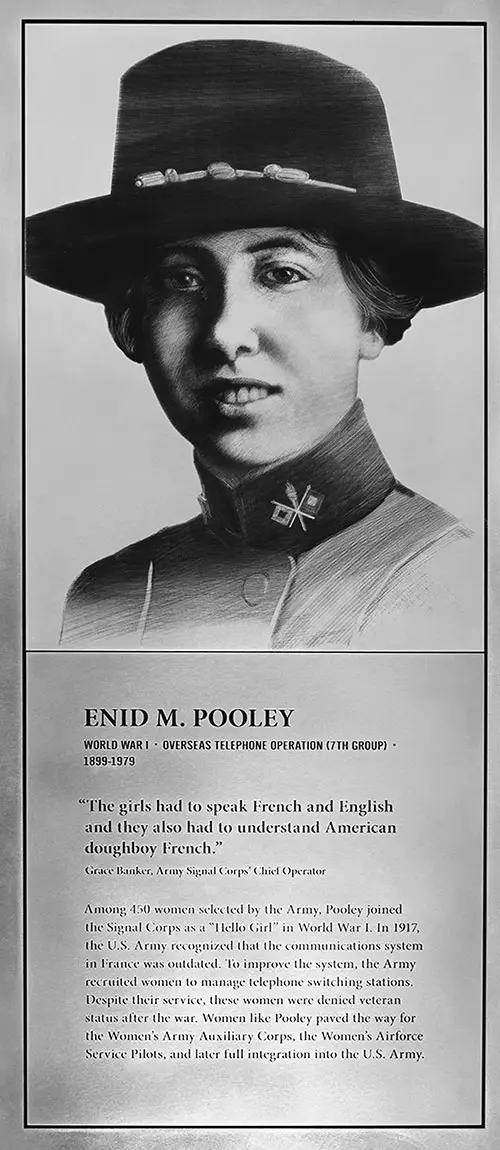
Affidavit of Enid M. Pooley (1977) — Unit 7 Signal Corps Telephone Operator
A first-person account from a Unit 7 operator who took the oath, wore the regulation Signal Corps uniform, trained with PT&T/AT&T, and was staged to embark when the Armistice (11/11/1918) halted deployment. Pooley’s sworn statement became key evidence in
the Hello Girls’ recognition effort.
Photographs
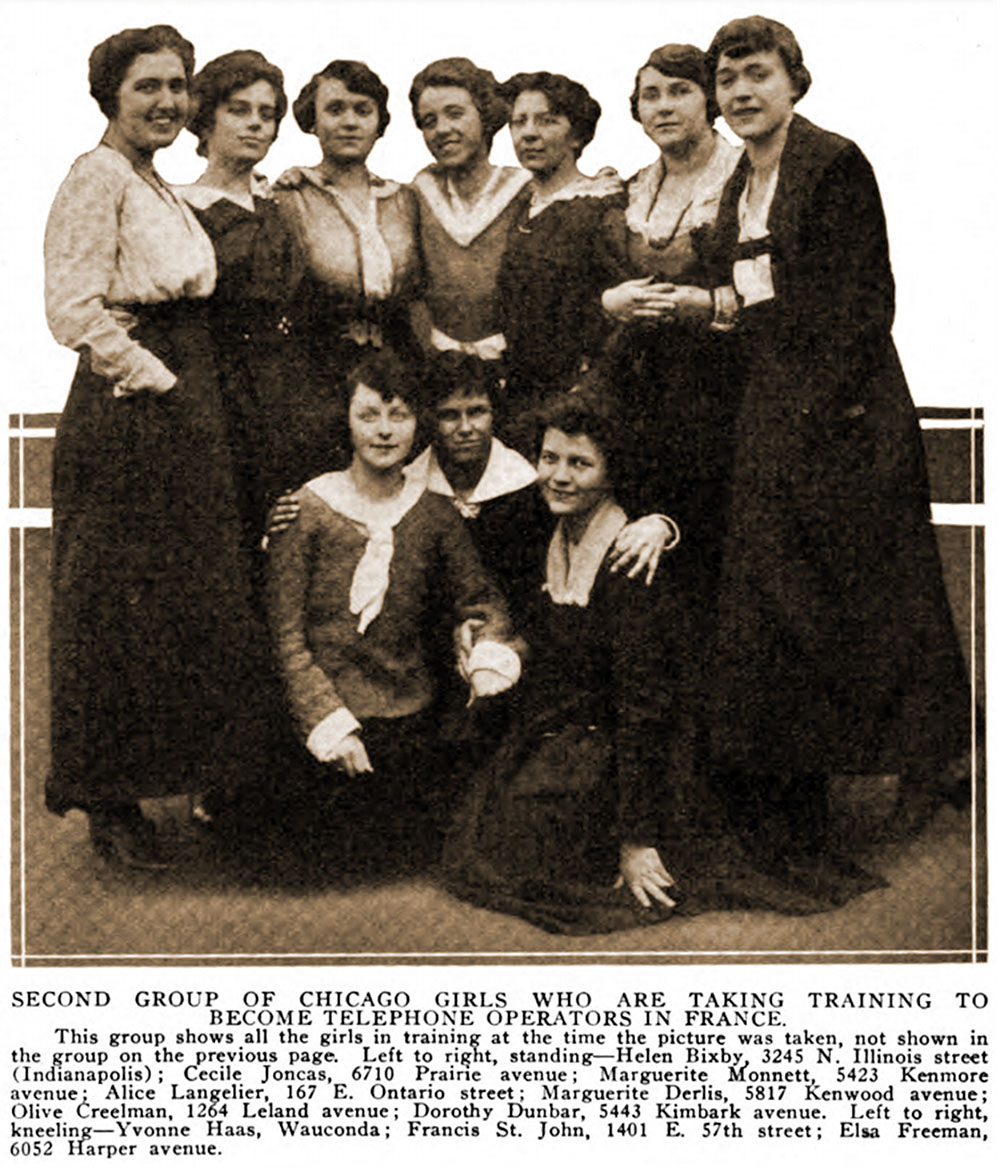
Second Group of Chicago Girls Who Are Taking Training to Become Telephone Operators in France. This Group Shows All the Girls in Training at the Time the Picture Was Taken, Not Shown in the Group on the Previous Page. Left to Riçht, Standing—Helen Bixby, 3245 N. Illinois Street (Indianapolis); Cecile Joncas, 6710 Prairie Avenue; Marguerite Monnett, 5423 Kenmore Avenue: Alice Langelier, 167 E. Ontario Street; Marguerite Derlis, 5817 Kenwood Avenue; Olive Creelman, 1264 Leland Avenue; Dorothy Dunbar, 5443 Kimbark Avenue. Left to Right, Kneeling—Yvonne Haas, Wauconda; Francis St. John, 1401 E. 57th Street; Elsa Freeman, 6052 Harper Avenue. Bell Telephone News, April 1918. | GGA Image ID # 19af1477d1. Click to View a Larger Image.
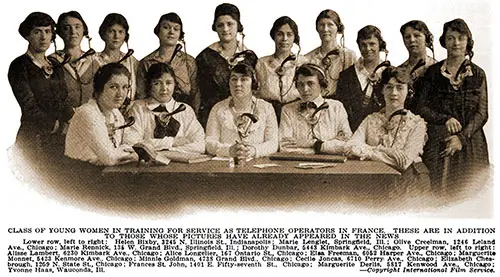
Class of Young Women in Training for Service as Telephone Operators in France. These Are in Addition to Those Whose Pictures Have Already Appeared in the News Lower Row, Left to Right: Helen Bixby, 3245 N. Illinois St., Indianapolis; Marie Lenglet, Springfield, Ill.; Olive Creelman, 1246 Leland Ave., Chicago; Marie Rennick, 136 W. Grand Blvd., Springfield, Ill.; Dorothy Dunbar, 5443 Kimbark Ave., Chicago. Upper Row, Left to Right: Alisse Lambert. 6230 Kimbark Ave., Chicago; Alice Longelier, 167 Ontario St, Chicago; Elsa Freeman, 6052 Harper Ave., Chicago; Marguerite Monnet, 5425 Kenmore Ave., Chicago; Minnie Goldman, 4738 Grand Blvd., Chicago; Cecile Joncas, 6710 Perry Ave., Chicago; Elizabeth Cheabrough, 1269 N. State St, Chicago; Frances St John, 1401 E. Fifty-seventh St., Chicago; Marguerite Derlis, 5817 Kenwood Ave., Chicago; Yvonne Haas, Wauconda, Ill. Photograph © International Film Service. Bell Telephone News, May 1918. | GGA Image ID # 19b5ee3dcb
External Resources
Repository Information
The Gjenvick-Gjønvik Archives (GG Archives) is cataloged with the Library of Congress under MARC Org Code: WiMfGGA and ISIL: US-wimfgga.
Current location:
N91W16562 Pershing Ave, #1
Menomonee Falls, Wisconsin 53051-2170, USA
Note: Historic addresses listed in earlier MARC records include Marietta, GA and Woodstock, GA. These appear in authority files but are no longer active.
