
Shipboard Affairs on the Ocean Liners
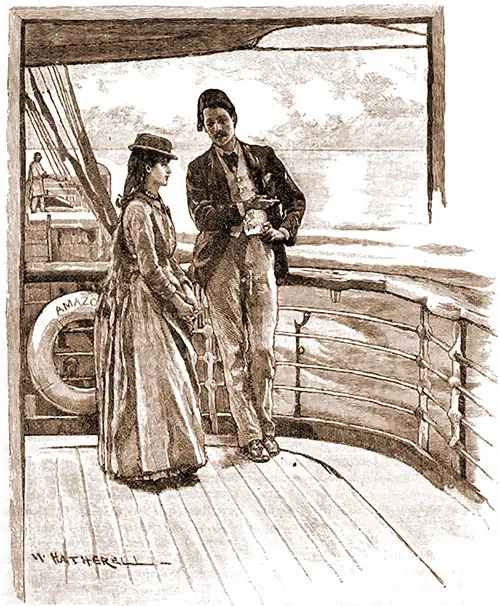
Life aboard a transatlantic steamer during the Edwardian era was a beautifully structured and ritualistic experience. The sea mist and heightened social expectations were common in the 1880s through the early 1900s. For the elite, each day was guided by a set schedule, leading passengers from a refreshing stroll along the mahogany-lined promenade deck to an afternoon of letter-writing in the elegant silk-draped reading rooms.
Within this floating palace, the rigid social norms of land began to dissolve under the uplifting influence of ocean air. The vastness of the Atlantic offered a romantic, dreamlike escape, where a shared glance over a wool steamer rug or a brief conversation during a game of deck quoits could ignite a gentle spark of fascination.
As twilight fell, the ship transformed into a stage for enchanting courtship. Gentlemen in crisp dinner jackets and ladies in sumptuous silk gowns gathered for multi-course dinners, where the warm glow of electric chandeliers masked the thrilling anticipation of new romances.
A chaperoned stroll afterward toward the Verandah Café offered a rare and exhilarating sense of intimacy, enhanced by the rhythmic thrum of the massive steam engines below. In these shadowy corners of the deck, away from the watchful eyes of high-society matrons, young travelers exchanged whispered confidences against the backdrop of the vast, infinite sea—embracing the fleeting magic of this moment before the ship docked in New York.
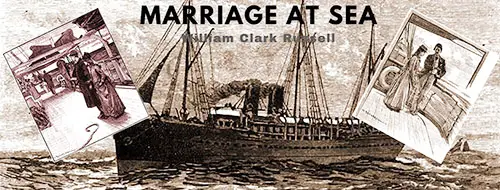
"Marriage at Sea" is an 1890 novelette by W. Clark Russell, published in Lippincott's Monthly Magazine. The story delves into the romantic and legal intricacies of marriages conducted aboard ships during the late 19th century. While the characters and plot are fictional, the narrative offers a window into maritime customs and societal norms of that era. A 90-minute enjoyable read -- even with the "Old English" prose. In summary, "Marriage at Sea" serves as a valuable literary piece that encapsulates the romanticism and legal nuances of maritime unions in the 1890s, providing insights beneficial to educators, genealogists, and historians alike.
The 1914 article from Harper’s Bazar, Children on Shipboard, provides a fascinating glimpse into the experiences of children aboard early 20th-century ocean liners. It highlights how attitudes toward bringing children on long sea voyages evolved from avoidance to accommodation, with steamship companies creating dedicated spaces, entertainment, and even caretakers for young travelers.
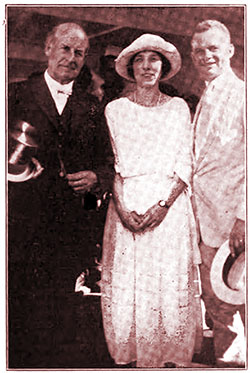
"A Wedding on Shipboard" (1923) provides a rich and vibrant account of an early 20th-century shipboard marriage, highlighting the romantic, legal, and social dimensions of ocean travel. This article is an excellent resource for those studying maritime history, genealogy, and early travel experiences, illustrating how ocean liners functioned as more than just transportation vessels but as floating communities where significant life events took place.
While the Edwardian era was ripe with shipboard romances, couples rarely tied the knot at sea due to strict legal, logistical, and cultural barriers. The widespread belief that a ship captain can legally marry people is a misconception popularized by Hollywood and maritime folklore.
Under British and American maritime laws, captains were legally required to log all births, deaths, and marriages that happened onboard. This record-keeping duty was widely misinterpreted by the public as the power to officiate weddings.
In the 1920s, federal agencies like the US Bureau of Navigation explicitly stated that a shipmaster had "no more right to perform a marriage ceremony than a pilot or stevedore." British law similarly mandated that marriages must take place in a stationary, publicly accessible place.
During the early 1900s, international waters were a legal gray area. Most land-based jurisdictions viewed weddings performed at sea as completely null and void. Wealthy Edwardian passengers would never risk a sea wedding because an invalid marriage could legally jeopardize their children's legitimacy, social standing, and inheritance rights.
If a wedding did occur on an ocean liner, it was almost always because a registered clergyman or priest happened to be traveling onboard as a passenger. Some grander ships carried a ship's chaplain. However, even with a real minister present, the couple usually had to wait until the ship crossed into a specific country's territorial waters or landed in port to ensure the paperwork was legally recognized.
Edwardian high society valued grand, elaborate weddings performed in historic churches or massive family estates to showcase wealth and cement social alliances. A sudden, scaled-down wedding in a ship's dining salon would have been viewed by high society as highly scandalous—implying an elopement, a family feud, or a desperate rush to cover up an impropriety.
Repository Information
The Gjenvick-Gjønvik Archives (GG Archives) is cataloged with the Library of Congress under MARC Org Code: WiMfGGA and ISIL: US-wimfgga.
Current location:
N91W16562 Pershing Ave, #1
Menomonee Falls, Wisconsin 53051-2170, USA
Note: Historic addresses listed in earlier MARC records include Marietta, GA and Woodstock, GA. These appear in authority files but are no longer active.
